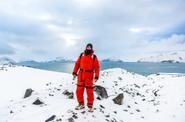
Swan Hellenic Expeditions parks will be waiting in the cabin on the first day of the cruise. Your cruise manager will check your size in advance. We strongly recommend choosing a parka size with a small margin so that you can move comfortably in it.
The parka consists of two jackets: an inner insulated jacket, an outer membrane windproof and waterproof, they can be combined or worn separately for comfort in any temperature regime; 3M Finetex Taslan 330D membrane; water resistance 5000 mm; breathability 5000 ml/g; high collar protects neck and face even with the hood down;
The elongated cuffs are fixed over the gloves with two adjustable fasteners that replace Velcro fasteners to meet biosafety requirements; an elongated back for comfortable sitting in the Zodiac; an adjustable hood with a microfibre lining for extra warmth and a visor for optimal visibility in all conditions.
For comfort and safety, it is important not to get wet.
The reason for getting wet may be precipitation, splashes of seawater when moving on the Zodiac, or condensation of moisture under clothing. The Swan Hellenic park protects you from wind and water, but what should you wear under it?
When choosing clothes, pay attention to the material – wool, silk and fleece (polar fleece) retain heat better than cotton. The material should be "breathable", this will prevent condensation of moisture inside the parka.
Waterproof trousers for boating and land-based walks are a must-have item from the list of things. Your ski pants can perfectly fulfill their role. Wear them over regular trousers or thermal underwear.
Gore-Tex and similar fabrics are preferred — they are both waterproof and breathable.
The secret of heat preservation is layering.
Layering is one of the most important principles of choosing clothes for Antarctic expeditions. It's better to wear a few light clothes than one very warm one. You can always remove a layer of clothing if it gets hot, or put it back on if it gets cool.
We recommend choosing loose-fitting clothes that, unlike tight-fitting ones, leave room for an airy layer. This will provide additional isolation of body temperature. When choosing outerwear, it is better to give preference to synthetic materials, they keep their shape well and deform less. And the polystyrene lining is a better insulator than natural fluff.
Footwear.
For excursions and landings during the expedition, you will be provided with special Muck Boots. Woolen or insulated socks will be a good addition to rubber boots. Be sure to bring a few pairs of warm socks with you.
When choosing a material, focus on quality and composition (merino wool, nylon, organic fibers), not thickness. The most suitable options can be found in specialized travel stores.
Hat and gloves.
During the expedition, the head must be kept warm. Choose warm windproof hats that cover your head and ears. To protect the neck and chin, a collar-front scarf is best suited, it is more effective and less voluminous than a regular scarf. For additional protection, you can take a balaclava with you.
It is also important to keep your feet and hands warm at all times. Try to keep them dry. A great solution would be to take mittens, ski waterproof gloves and insulated gloves to be prepared for weather changes.

 Our Chinese department: