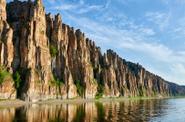
1. These Rules define the procedure for visiting the specially protected natural area "Lena Pillars National Park" (hereinafter referred to as the National Park), establish the rules of visitor behavior in the territory and its tourist and recreational areas.
2. A national park is a specially protected natural territory, within the boundaries of which there are zones in which the natural environment is preserved in its natural state and any activity not provided for by this Federal Law is prohibited, and zones in which economic and other activities are restricted in order to preserve objects of natural and cultural heritage and their use for recreational purposes.
3. These Rules have been developed on the basis of and in accordance with:
3.1. Federal Law "On Specially Protected Natural Territories" No. 33-FZ dated 03/14/1995; Federal Law "On Environmental Protection" No. 7-FZ dated 01/10/2002; Federal Law "On the Basics of Tourism Activities in the Russian Federation" No. 132-FZ dated 11/24/1996; Code of Administrative Offences of the Russian Federation; Regulations on the Lena Pillars National Park. Decree of the Government of the Russian Federation dated December 21, 2023 No. 2229 "On Approval of the Rules for the Organization and Implementation of tourism, including ensuring the safety of tourism in specially protected natural territories of Federal significance"; GOST standards R56642-2021, R57287-2021.
4. In order to ensure the safety of tourism, the time, timing, conditions of visits, places specially equipped for tourism and routes are determined taking into account weather conditions, terrain and other factors, as well as the uniform distribution of recreational load.
5. The National Park provides cultural and educational services to visitors in accordance with the Regulations on the Lena Pillars National Park, and provides citizens with access to the tourist and recreational area during established opening hours.
5.1. Tourist and recreational areas are open to the public daily from 10:00 to 19:00, without interruption.
5.2. Organized groups of tourists visit the National Park if there is a contract between the park and the travel company for the provision of sightseeing services. In this case, the person accompanying the group must present the outfit of the travel company. In the absence of the above-mentioned agreement, the purchased entrance tickets are presented at the entrance.
6. Persons accompanying organized groups, individual tourists and tourists are obliged to inform each provision of the Rules of Visiting visitors. The National Park, the Rules for the organization and implementation of tourism, including ensuring the safety of tourism in specially protected natural areas of federal significance, information materials on visits to specially protected areas of federal significance.
7. Tourists and tourists are obliged to comply with legislation in the field of environmental protection, waste management, health protection, sanitary and epidemiological welfare of the population, the legislation of the Russian Federation on fire safety (including when organizing tourist camps), the legislation of the Russian Federation on specially protected natural territories, and also, the requirements of the Rules for the organization and implementation of tourism, including ensuring the safety of tourism in specially protected natural areas of federal significance.
8. Vehicles and special equipment for the movement of tourists and tourists in the course of tourism should be used in such a way that it does not pose a threat to the conservation of biological and landscape diversity, individual ecological systems.
9. When entering the tourist and recreational areas of the National Park, visitors are required to observe the order and order.
10. During a visit to the tourist sites of the National Park, visitors have the right to:
10.1. Be instructed using information materials about visiting a specially protected area of federal significance, including getting acquainted with the addresses of nearby medical centers, information about voluntary medical insurance, and the behavior of tourists and tourists when they accidentally encounter wild and dangerous animals.;
10.2. To get acquainted with the sightseeing facilities of the park, following only the route indicated by signs and special signs.,
10.3. To receive tour services in accordance with the approved methodological documentation and taking into account the practical possibilities of the park.
10.4. To take video and photographs without flash with an amateur camera within the boundaries allowed for the passage of tourists, as well as using methods that do not cause concern to wildlife and do not affect the natural course of natural processes.
11. During visits to tourist sites Visitors to the National Park are prohibited:
11.1. Smoking (including electronic cigarettes) and drinking alcoholic beverages, using narcotic and toxic substances, as well as being in a state of alcoholic, narcotic and toxic intoxication that offends human dignity and public morality;
11.2. To break the silence after 23 hours by singing, loud laughter, shouting and other noise-producing activities;
11.3. To leave the parking place, camping, recreation center without the permission of the head (senior) of the group;
11.4. Bathing outside the places designated for these purposes, as well as bathing without the presence of the head (senior) of the group.;
11.5. To leave and throw garbage and other waste in the places of stay;
11.6. Entry and parking of all types of transport without a permit and payment for entry and parking of transport;
11.7. Using fishing gear without the permission of the state inspector, even if you have a fishing permit.;
11.8. Using video and still cameras without permission and payment for filming;
11.9. Any deliberate manipulation of objects of the animal and plant world to ensure the best conditions for film, video and photography (fitting or scaring objects of the animal world, removing objects of the plant world from the ground);
11.10. To make films, videos and photographs that in any way interfere with the activities of employees who manage specially protected natural areas of federal significance;
11.11. To take film, video and photographs using additional attachments, quadcopter drones, spotlights, light screens, other equipment and special props without prior approval from employees managing specially protected natural areas of federal significance.
11.12. Misuse of rented park property or its damage;
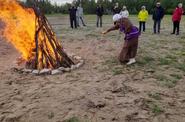
11.13. To build a campfire outside the designated places, without the permission of the park staff, to light and use stoves, as well as to use them for other purposes;
11.14. Sale of alcoholic beverages near recreation centers, camps, tourist recreation areas and on the park territory itself;
11.15. Stay with traumatic, pneumatic, firearms in the territory of the National Park;
11.16. Inscription on rocks, trees, walls, etc.;
11.17. To pluck flowers, grass, etc., to break shrubs and trees, to pollute reservoirs and the coastal part of rivers;
11.18. Walking pets (except guide dogs);
11.19. Feeding of animals located on the territory of the National Park;
11.20. To remove objects, objects, etc., of historical and cultural value from the park.;
11.21. Damage or destroy full houses, stands, information signs and other infrastructure facilities of the park.
12. Administration The National Park has the right to:
12.1. To change the duration of the park's tourist facilities in the direction of its increase or decrease.
12.2. To refuse service to persons who are in a state of alcoholic, narcotic or other toxic intoxication.
12.3. Close the tourist facilities of the park as a whole or individual facilities, including for technical breaks, sanitary days and other technical reasons.
13. Every visitor The National Park is obliged to comply with the established Rules of Conduct.
14. A person who has caused damage and material damage to a National Park may be held administratively or criminally liable, and is also obliged to compensate the damage in full. If a person does not agree to compensate for the damage caused, the National Park implements its claim in court.
15. The use of images of any objects of the National Park obtained during photo and video filming for commercial purposes is possible only on the basis of an agreement with the National Park.
16. Compliance with these Rules is monitored by employees of the National Park.
17. Persons who refuse to comply with these Rules are removed from the park without refund of the entrance fee.
Safety
1. The tourist is obliged to strictly follow all instructions of the state inspector, the head of the group
2. Before visiting the park, the tourist has the right to issue a voluntary medical insurance Contract.
3. Before visiting the park, read the weather forecast and prepare for possible weather changes.
4. During visits to protected areas on the route, it is necessary to strictly observe sanitary and hygienic rules and immediately notify the supervisor of any illness or injury, even minor ones.
5. Beware of trying unknown berries, mushrooms, and collecting obviously poisonous plants in the herbarium.
6. If a thunderstorm hits in the forest, do not hide under tall trees. Free-standing spruce and pine trees are especially dangerous. Being in an open place in a thunderstorm, it is better to lie down or sit down in a pit or ditch.
7. Walk, don't run, don't rush. Wear shoes that are comfortable for the season and location conditions.
8. In windy and dusty weather, wear safety glasses to prevent clogging of the eyes.
9. To prevent heat stroke, do not wear unnecessarily warm and "stuffy" (non-ventilated and non-sweat-absorbing) clothing.
10. To prevent injury related to burns, the following rules must be followed::
Campfire attendants should wear trousers, shoes, and mittens.;
● do not allow games and entertainment with fire;
● Ready-made hot food should be set aside only in a place where people cannot step on it.
11. Before leaving, in any weather, be sure to fill the campfire with water.
12. A tourist must have a hat, a T-shirt or a long-sleeve shirt, sunglasses, and a windbreaker on the route. In hot weather, drink more fluids.
13. It is strictly forbidden to swim in reservoirs, as well as in places with fast currents, or jump into the water in unknown places.
14. It is forbidden to drink raw water.
15. Tourists whose health condition requires regular medication intake should provide themselves with them in advance for the entire duration of the route, as well as inform the senior group about their illness.
16. Inform the park staff about any suspicious actions or violations.
17. Have food and water supplies with you, as well as a first aid kit.
18. Be attentive to
Liability for violation of environmental legislation requirements
1. In accordance with Article 8.39 of the Code of Administrative Offences of the Russian Federation, violation of the established regime or other rules for the protection and use of the environment and natural resources in the territories of state nature reserves, national parks, natural parks, state nature reserves, as well as in territories containing natural monuments and other specially protected natural territories or in their protected areas - entails the imposition of an administrative fine on citizens in the amount of three thousand to four thousand rubles with or without confiscation of tools for committing an administrative offense and products of illegal use of natural resources; on officials - from fifteen thousand to twenty thousand rubles with or without confiscation of tools for committing an administrative offense and products of illegal use of natural resources; for legal entities - from three hundred thousand to five hundred thousand rubles with or without confiscation of instruments of committing an administrative offense and products of illegal use of natural resources.
2. In accordance with Article 8.31 of the Code of Administrative Offences of the Russian Federation, violation of the rules of sanitary safety in forests -
entails a warning or the imposition of an administrative fine on citizens in the amount of five hundred to one thousand rubles; on officials - from one thousand to two thousand rubles; on legal entities - from ten thousand to twenty thousand rubles.
3. In accordance with Article 8.32 of the Code of Administrative Offences of the Russian Federation, violation of fire safety rules in forests -
entails a warning or the imposition of an administrative fine on citizens in the amount of fifteen thousand to thirty thousand rubles; on officials - from thirty thousand to fifty thousand rubles; on legal entities - from one hundred thousand to four hundred thousand rubles.
4. In accordance with Article 262 of the Criminal Code of the Russian Federation, violation of the regime of nature reserves, sanctuaries, national parks, natural monuments and other specially protected natural territories by the state, resulting in significant damage, -
is punishable by a fine of up to two hundred thousand rubles or in the amount of the convicted person's salary or other income for a period of up to eighteen months, or by deprivation of the right to hold certain positions or engage in certain activities for up to three years, or by compulsory labor for up to four hundred and eighty hours, or correctional labor for up to two years.
A reminder for a protected area visitor.
Remember!
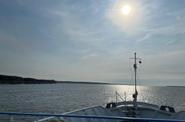
The time of occurrence of an emergency is considered to be the time of non-arrival on the ship within the prescribed period.
In this case, the staff of the National Park will organize your search with the involvement of the appropriate rescue services, and you will be required to reimburse the funds spent on your search either voluntarily or by compulsory (judicial) procedure.
Optimal time for sunbathing: up to 11 o'clock, from 15 o'clock. Do not overuse sunbathing. In any case, do not arrange a quiet hour under the scorching rays of the sun. Do not forget that severe sunburn can lead to skin cancer.
The flammability of plastics is very high, and many types of plastics become fluid when heated.
Do not throw plastic or foreign objects into the fire — this can lead to burns, the consequences of which can be serious harm to health. When inhaling gases formed during the burning of plastics, plastics and other objects containing chemicals, poisons enter the body, causing headaches, decreased immunity, suffocation, dry cough, and other serious consequences, including damage to the respiratory organs.Gorenje Anyone sitting close to the campfire may experience local irritation of the mucous membranes of the eyes, mouth, nose, nervous system disorders and other consequences.
Under no circumstances should you leave behind any fires that have not been extinguished. When leaving the resting place, make sure that the fire is extinguished and the coals are no longer smoldering.
If you see a fire, take measures to extinguish it and immediately notify the staff of the national park.
It is forbidden to shout, listen to music loudly, frighten, harass or
Remember that a protected area is not a human territory, being in a protected area, you are visiting the wild.

 Our Chinese department: