Breakfast at the hotel.
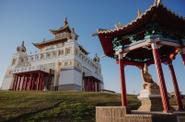
10:00 Departure to the Shakusn Xume hurul, the first hurul built in the post—Soviet period after the complete destruction of Buddhist huruls and stupas. This place is sacred to the Kalmyks, since the restoration of the Buddhist faith in the republic after the Soviet era of oblivion began from here.
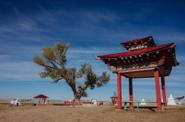
Shakyusn-xume (kalm. Sakusn-sum) is a Buddhist temple in the Republic of Kalmykia. Khurul is located six kilometers from the capital of Kalmykia, near the village of Arshan. The official name of this religious building is "Geden Sheddup Choikorling", which in Tibetan literally means "The Holy monastery of the theory and practice of the Gelug school", and loosely translated — "The Holy Monastery of enlightened monks." This name was bestowed by His Holiness the Dalai Lama XIV in advance, even before the construction of the temple, in 1992.
This place was consecrated in 1992 by the Dalai Lama XIV himself during his second visit to Kalmykia, and four years later the Shakyusn-Xume hurul was erected on this site.
In 2004, the Dalai Lama visited Kalmykia and Elista for the third time to hold the radne ceremony, after which Hurul rightfully became a real abode of deities. You can see where the monks live, there is a small house nearby, in which the Dalai Lama XIV gave Teachings to the Buddhists of Kalmykia and Russia.
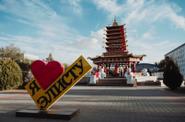
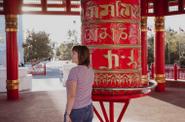
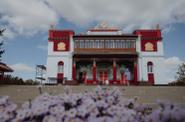
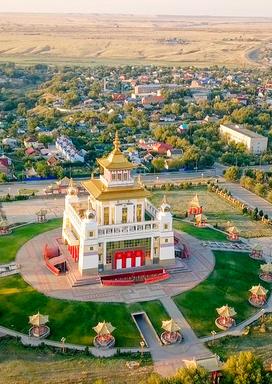
11:00 Visit to the Central Hurul "Golden Abode of Shakyamuni Buddha" — external and internal inspection of the temple with a guide.
The Golden Monastery of Shakyamuni Buddha is the largest Buddhist temple in the Republic of Kalmykia and one of the largest in Europe. The Hurula building is 63 meters high and houses the largest 9-meter Buddha statue in Russia and Europe.
The temple is one of the main attractions of the city of Elista. It is a majestic building where prayer services, rituals and festive divine services are performed.
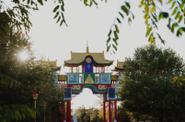
The perimeter of the building of the "Golden Monastery of Shakyamuni Buddha" is surrounded by a fence with alternating snow-white stupas every five meters. There are 108 stupas around khurul. The southern gate is the main one.
In total, there are four entrances in the temple fence, located on the four cardinal directions. The perimeter of the temple is surrounded by colorful prayer flags — "horses of the wind", when they fly, all the bad things go away. The architectural plan of the monastery has the shape of a mandala.
The hurula building is surrounded by 17 pagodas with statues of the great Buddhist teachers of Nalanda Monastery. In front of the temple there is a statue of the White Elder Tsagan Aav, lord, defender of the Earth, the embodiment of wisdom, justice and spiritual purity. Tour of Khurul: dugan, museum. When going around the altar, you can put coins. It will be considered an offering.
13:00 Lunch at the Four Seasons Cafe is included in the price.
15:00 Museum of Nomadic Peoples with a presentation of Todo Bichg — Old Kalmyk script — vertical clear writing.
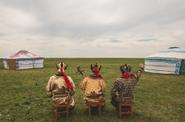
Acquaintance with the traditional nomadic dwelling, life, traditions and rituals of the Kalmyk people.
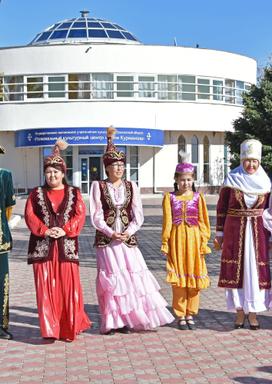
In the interactive museum, you can take a photo session in national costumes (about 60 costumes), shoot arrows, learn how to solve unique Kalmyk puzzles, and learn how to tie a Kalmyk knot.
Introduction to Kalmyk and Mongolian musical culture. Tourists will hear the sound of folk musical instruments and popular Kalmyk folk songs performed by a professional musician and singer.
The museum also hosts workshops on Kalmyk dance.
The program also includes a tea party.
You will enjoy tastings of traditional Kalmyk tea with bortsokami, national fermented milk drinks chigyan and koumiss.
Presentation of Todo Bichg— an Old Kalmyk script created in 1648 by the Oirat scholar and educator Zaya Pandita. The name of this script literally translates as "clear writing", because unlike other Mongolian writing systems, Todo-bichg is the most understandable and easy to read.
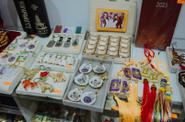
The Museum of Nomadic Peoples in Elista is the only place in Russia where you can order a personalized amulet in the Old Kalmyk vertical script (In Buryatia they write in the Old Mongolian script). The master calligrapher writes individual wishes in vertical ancient script. Tourists usually order their name or the name of the person to whom they are making a gift charm, and their wishes, innermost thoughts, and dreams can be transferred to an ancient Buddhist letter, hung in a prominent place in their home on the northeast side, where a lot of energy circulates, and your dreams will come true. That's how this letter works.
The Old Kalmyk script Todo bichig — "clear writing" — vertical writing or heavenly writing, as it is written from top to bottom, the letters fall from heaven to earth.
The inscriptions are written calligraphically with a brush in special ink and sealed with a red seal, the personal seal of the master calligrapher. This is the ancient culture of the East. Each letter of the written language contains a history, centuries—old experience of cross-cultural communication. A person's name is a magical formula of sounds and their inherent energy. And a person's name, written in an ancient language, is a powerful energy, an individual program of a person. Each letter of a person's name has the power of sound, it is an integral part of his physical essence.
You can make a reservation.
By your arrival, the master will prepare and hand you your personalized amulet.
Free evening, dinner on your own.

 Our Chinese department: