 Our Chinese department:

Departure from Yakutsk at 19:00.


Would you like to experience the beauty of Siberian nature and immerse yourself in the atmosphere of ancient traditions? Then this cruise is just for you!
Embark on an exciting adventure along the scenic route from Yakutsk to Ust-Kut with a visit to the legendary Lena Pillars, hospitable Olekminsk and Vitim, amazing Lena cheeks and charming Kirensk.
Discover amazing places and get an unforgettable experience!

Location
Republic of Sakha (Yakutia), Yakutsk
from
$1,958
+ tickets to the starting point of the tour
No need to pay now
Duration
9 days
8 nights
Departures
24 May - 1 Jun, 2027
The tour dates and program are not confirmed yet
Please send a request to clarify
Accommodation
- Cabin on the boat8 nights
Comfort
- Midscale
Difficulty
Easy
Suitable for everyone
Group
Up to 210 touristsGroup meet at
Republic of Sakha (Yakutia), Yakutsk Contact the tour coordinator
Weekdays: 8am - 8pm
Weekends: 8am - 7pm (GMT +3)
Weekends: 8am - 7pm (GMT +3)
Or text us in messengers
Tour highlights

Majestic Lena Pillars
Visit Lena Pillars National Park and climb the cliffs

A variety of experiences
You can go fishing, go on hiking tours, and also relax on board the ship.

The picturesque Lena River
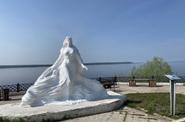
Enjoy the magnificent scenery and take photos at the monument to the river
Itinerary
- Day 1 - Yakutsk
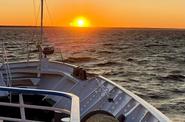
- Day 2 - Lena pillars
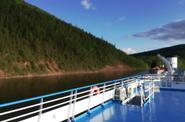
Visit to the Lena Pillars National Park and rock climbing.
The Yakut rite of blessing Algys.


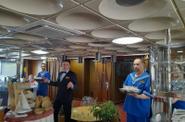
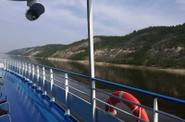
- Day 3 - The program on the ship
The program on the ship.

- Day 4 - Olekminsk
Visit to the Museum of local lore.
Bus tour of the city.
Photo pause at the monument of the Lena River.
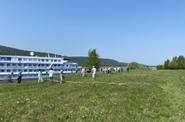
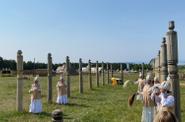
A short cultural program in the picturesque Ysyakh valley.
- Day 5 - The program on the ship
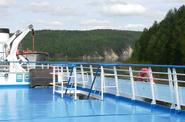
The program on the ship.


- Day 6 - Vitim
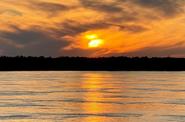
Entering the mouth of the Vitim river before the inscription "Ugryum river".
Visit to the school museum of local lore.
Walking tour of the village.

- Day 7 - Lena Cheeks
A green parking lot near the rocky shore of the 3rd Cheek, a unique landmark of the upper Lena River.
Fishing.


- Day 8 - Kirensk
Visit to the museum of local lore in the historical part of Kirensk.
Walking tour of the city to the mouth of the Kirenga river.


- Day 9 - Ust-Kut
Arrival in Ust-Kut at 16:00.
Difficulty
Suitable for everyone
Accommodation
Accommodation
- Cabin on the boat8 nights
Comfort
- Midscale
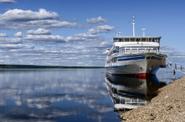
The cruise is operated by the Demyan Bedny motor ship.
The cost depends on the category of accommodation:
| Cabin categories/accommodation method | Cost | |
| Four-seater | for 4 people | 150 000 |
| for 3 people | 165 000 | |
| for 2 people | 230 000 | |
| for 1 person | 250 000 | |
| Triple room | for 3 people | 165 000 |
| for 2 people | 230 000 | |
| for 1 person | 250 000 | |
| Single room (with additional location) | for 2 people | 150 000 |
| for 1 person | 230 000 | |
| Junior Suite | triple room | 150 000 |
| double room | 300 000 | |
| for 1 person | 300 000 | |
| Captain's Suite | 620 000 | |
| Luxury | 710 000 | |
Discounts:
- children under 6 years old – free of charge without providing a separate place;
- children from 7 to 12 years old get a 25% discount on accommodation.
Luxury cabin or Junior Suite cabin or 8 nights
Luxury cabin
Suites No. 200, 201 on the boat deck for 2 adults (area 19.77 m2).
Suite No. 308 (captain's) on the sun deck (area 16.0 m2);
In the cabin: two rooms (bedroom, guest room), double bed, shower, toilet, radio, mini fridge, electric kettle, internal telephone, TV, two additional individual air conditioners, cupboards, bedside table, chair, corner sofa, coffee table.
Additionally provided: bottles of water, one carafe with glasses, tea, bathrobes, slippers, bedding, towels (large and small), toothbrushes, toothpaste, shampoo and conditioner for hair, shower gel for each tourist and a hairdryer.
Attention! One blanket goes to a double bed for 2 adults.


Another option
Junior Suite cabin
Junior Suites № 106, 107, 108, 109, 111 on the main deck, No. 202-208, 210 on the boat deck for 2 adults (area 10.66 m2);
In the cabin: double sofa, shower, toilet, radio, mini fridge, TV, additional individual air conditioning, wardrobe, bedside table, chair.
Additionally provided: bottles of water, a carafe with glasses, tea, bathrobes, slippers, bedding (pillowcase, blanket and sheet), towels (large and small), toothbrushes, toothpastes, shampoo and conditioner for hair, shower gel for each tourist and a hairdryer.
Attention! One blanket goes to a double bed for 2 adults.
Junior Suites with extra beds No. 110, 112, 113 on the main deck, No. 209 on the boat deck for 3 adults (area 10.66 m2);
In the cabin: a double sofa, an upper pull-out berth, shower, toilet, radio, mini fridge, TV, additional individual air conditioning, wardrobe, bedside table, chair.
Additionally provided: bottles of water, a carafe with glasses, bathrobes, slippers, bedding (pillowcase, blanket and sheet), towels (large and small), toothbrushes, toothpastes, shampoo and conditioner for hair, shower gel for each tourist and a hairdryer.
Attention! One blanket goes to a double bed for 2 adults.


Another option
Single cabin (with extra location)
Single cabins with additional berth No. 100-105 on the main deck for 2 adults (area 6,8 m2).
In the cabin: a single sofa bed, an upper pull-out berth, shower, toilet, radio, cupboards, bedside table, chair.
Additionally provided: bedding (pillowcase, blanket and sheet), decanter with glasses, towels (large and small), toothbrushes, toothpastes, shampoo and conditioner for hair, shower gel for each tourist.


Another option
Double and triple cabins (standard 2+1)
Double cabins with extra berth No. 211-234 for 3 adults (area 10.66 m2);
In the cabin: three beds (two downstairs and one upstairs), shower, toilet, radio, cupboards, bedside table, chair.
Additionally provided: bedding (pillowcase, blanket and sheet), decanter with glasses, towels (large and small), toothbrushes, toothpastes, shampoo and conditioner for hair, shower gel for each tourist.


Another option
Four-person cabin
Four-person cabins No. 114-132 for 4 adults (area 11.22 m2);
The cabin has four beds (two downstairs and two upstairs), shower, toilet, radio, cupboards, bedside table, chair.
Additionally provided: bedding (pillowcase, blanket and sheet), decanter with glasses, towels (large and small), toothbrushes, toothpastes, shampoo and conditioner for hair, shower gel for each tourist.


Tour conditions
Group
up to 210 tourists
Duration
9 days 8 nightsGroup meets at
Republic of Sakha (Yakutia), Yakutsk
Included in price
- accommodation on the ship;
- insurance;
- cultural and educational program;
- buffet meals;
- sightseeing tours in Olekminsk, Kirensk, Ust-Kut;
- The "green" stops are at the mouth of the Ura River, at the Lena Cheeks metro station.
Paid extra
- air and railway tickets to and from Yakutsk Ust-Kuta;
- accommodation before and after the tour;
- meals not included in the tour program;
- additional services on board the ship.
It's important to know
Are there age restrictions?
Age is not important, but it should be borne in mind that the program is full of stops with guided tours of museums, and perhaps the children will not be very comfortable or interesting.
Is there a memo?
TOURIST REMINDER
Necessary documents for the cruise:
- Passport / for children - birth certificate.
- Boarding pass.
- Medical policy.
Transfer (for long-distance cruise tourists):
upon arrival in Yakutsk, a transfer along the airport-hotel/rechport route is included, at the end of the cruise, a transfer to Yakutsk along the rechport-hotel/airport route is included;
Boarding
Boarding begins 1 hour before departure to the Rechport at the address: Yakutsk, Novoportovskaya str., 1 (berth down the road, approach the ship immediately).
Please bring your passport/birth certificate (for children under 14 years of age)./other identification document, boarding pass and meal cards (if purchased in advance).
Meals on board
The restaurant is open until 21:00, the lounge bar until 05:00.
For the convenience of tourists on board, there are three food changes in the restaurant. The time of meals, the number of shifts and seating in the restaurant's lounges may vary depending on the ship's load, route, and the number of tourists on the flight.:
1st shift 8:00-8:45 breakfast, 13:00-13:45 lunch, 19:00-19:45 dinner
2nd shift 8:45-9:30 breakfast, 13:45-14:30 lunch, 19:45-20:30 dinner
3rd shift 9:30-10:15 breakfast, 14:30-15:15 lunch, 20:30-21:15 dinner
There are coolers with water and boiling water in the corridors on the main and boat decks. There is a decanter with glasses in each cabin.
The restaurant offers a balanced menu with a choice of vegetarian and low-calorie buffet dishes for breakfast, lunch and dinner.
Cash and non-cash payment is possible on board the ship.
Alcoholic and non-alcoholic beverages purchased outside the bar are prohibited from entering restaurants and bars on the ship.
Smoking is prohibited in the ship's premises, only in the designated smoking area.
Drinking alcohol is prohibited in the cabin of the ship.
Pets are not allowed on the boat.
Medical care
To contact a healthcare professional, you must have SNILS and medical policy information with you.
There is a ship's medic on board the ship (main deck) who will provide you with emergency medical care.
The tour operator does not recommend cruises for people with chronic diseases, due to the peculiarities of some routes, and also reserves the right to refuse a cruise to the client due to the lack of timely specialized medical care. It is the responsibility of the client to notify the Company of their health status. Tourists with chronic diseases are advised to carry medications prescribed by a doctor.
A boat trip is not recommended for people in need of medical treatment and constant medical supervision.
The ship, cabins, gangways, berths are not suitable for persons with impaired locomotor functions to move along them.
At the time of booking, the tourist must provide full information about his or her health status if he or she is ill, infirm, disabled or physically disabled, or has limited mobility by filling out a special questionnaire, which is provided by PJSC LORP upon request.
PJSC LORP has the right to refuse to accept an order or to board a ship for a disabled tourist or a person with disabilities, based solely on safety considerations.
If a chronic or infectious disease of a tourist threatens the health of other tourists or crew members, and the tourist did not inform the tour operator's staff about his illness when purchasing the tour, then if such a disease is detected, he can be removed from the ship at the nearest port. At the same time, the amount paid for the tour is refunded, minus the expenses actually incurred by PJSC LORP related to the fulfillment of obligations under the Contract for the sale of tourist products.
A woman with a pregnancy period of less than 23 weeks at the end of the cruise must provide a medical certificate confirming that she is able to travel on board the ship, taking into account the dates and features of the route. If the pregnancy period exceeds 23 weeks at the time of the cruise, the Company does not recommend cruises due to the peculiarities of some routes, and also reserves the right to refuse the client to take a cruise due to the lack of timely specialized medical care. It is the responsibility of the client to notify the Company of his condition and the duration of pregnancy.
A tourist whose health condition may prevent him from traveling, taking into account the route, should receive a doctor's opinion on the possibility of making such a trip before booking it.
In emergency cases on board the ship, the ship's medic provides first aid free of charge and can prescribe medicines, necessary medical procedures, as well as place the tourist in isolation on board the ship or any similar facility, provided that the ship's doctor considers such measures necessary. The decision of the ship's doctor is supported by the authority of the captain. The passenger's refusal to assist in such treatment may lead to his disembarkation at any port, if necessary, this can be done with the involvement of local police officers or other competent authorities, and the cruise company is not responsible for losses, costs and does not pay compensation to the passenger.
In case of a tourist's illness during the tour (injury, exacerbation of chronic and other diseases requiring qualified medical treatment and care), the tourist is obliged to contact a medical institution in the nearest port. If the flight continues and the tourist refuses medical treatment in an inpatient facility, all responsibility for the results of the decision lies with the tourist, and the Company is not responsible for the consequences caused by the tourist's illness, and does not reimburse the cost of services unused by the tourist due to illness.
If it is necessary to hospitalize a patient, the ship must stop at the nearest berth equipped for this type of vessel. Claims of other tourists regarding schedule changes caused by such a stop are not accepted.
Safety
In case of a ship-wide alarm in case of a fire in the cabin or the detection of signs of it on the ship, the passenger must not panic, report the smoke or fire to the ship's crew, occupy cabins according to boarding passes, dress warmly, put on a life jacket and strictly follow the instructions received via the radio transmission network from the ship's captain (the person replacing him) and the management the cruise.
In case of interruptions in the operation of the broadcasting network, keep the cabin door open and carefully listen to the commands given by the members of the rescue team.
The ship is a high-risk vehicle, and the tourist undertakes not to leave unattended children taken on the trip, as well as incapacitated relatives, and is fully responsible for their behavior and health during the tour.
During stops in populated areas, the ship may depart from the berth to perform technological operations, which the Cruise Management notifies tourists in a timely manner.
Internet: there is no wifi on board the ship.
There is a separate ironing room available for all tourists on board the ship.
Bathroom accessories
Each cabin has a shower, toilet, towels, gel shampoo, soap and bed linen. In the junior suite and suite cabins, toothbrushes, a hairdryer, a bathrobe, and slippers are additionally provided.
Clothes
A free style of clothing is accepted on board the ship. When climbing to the top of the Lena Pillars and participating in sports games, we recommend taking sneakers and a tracksuit (things that replace them). As additional items, we recommend taking evening clothes for visiting a bar, restaurant, insect bites, sunscreens.
Values
The client is responsible for the safety of their money, valuables, property and documents throughout the cruise. You can use the safe at the reception.
When on board the vessel or at the berth, Customers are prohibited from:
- start boarding or disembarking before the vessel is fully moored and the ramp is provided;
- move from the ship's side to the berth and in the opposite direction without using the ladder;
- to throw matches, cigarette butts and any garbage overboard, as well as to litter, light bonfires in places of "green" parking lots for garbage collection special bins are installed on the ship.;
- go out on the main deck during mooring operations;
- climb into boats, use the ship's bell, remove lifebuoys unnecessarily;
- to transport alcoholic and narcotic products, firearms, cold steel;
- it is forbidden to bring aboard the ship:
-cold, firearms, gas weapons and ammunition for them, self-defense equipment and electric shock devices;
explosive (explosive), radioactive, toxic, poisonous, flammable, chemically active and strongly smelling objects and substances;
electric vehicles (electric scooters, monowheels, electric bicycles, gyroscuters, etc.);
narcotic, psychotropic substances and intoxicating mixtures;
other items that, in the opinion of the ship's captain, may pose a danger to tourists.
In case of an attempt to bring the above items on board, they will be seized and may not be returned. A tourist may be denied boarding a ship when trying to carry the most dangerous prohibited items (weapons, explosives or toxic substances, etc.).
- transport food and beverages, including alcoholic beverages;
- use and transport fire and pyrotechnic devices on the ship (torches, firecrackers, fireworks, sparklers, sound and fire rockets;
- transport animals and birds;
- smoke in places that are not equipped for this purpose, including cabins and all public areas. Smoking is allowed only in specially equipped places.;
- leave the lights on and the windows and doors open when leaving the cabin.;
- independently turn on or off the lights in public passenger cabins or change the intensity of lighting;
- to place promotional materials in the ship's premises without the consent of the Contractor;
- attach any materials in the ship's rooms to the walls, ceiling and floor;
- take out the ship's belongings in the parking lots (pastel linen, towels, glasses, ashtrays, etc.);
- use electrical appliances in cabins (except a hair dryer with a power of up to 800 watts, electric shavers and chargers);
- run along ladders and decks, sit on railings and railings, overhang over deck guardrails;
- submit false cries for help;
- feed seagulls from the decks of the ship, swim from the ship;
- jump into the water, transport objects with overall dimensions over 150x100x50 cm in the ship's premises.;
- enter and stay in office premises marked "No entry" and in places where ship's devices and mechanisms are located;
- leave electric heaters and lighting devices on, windows and doors open when leaving the cabin.;
- climb masts, climb into boats, use the ship's bell, remove lifebuoys unnecessarily;
- be on the upper deck of the vessel in front of the windows of the wheelhouse;
- independently turn on or off the lights in public passenger cabins or change the intensity of lighting. To do this, passengers should contact a representative of the crew or the cruise management or the ship's crew.;
- to attach any materials, including advertising materials, in the ship's rooms to the walls, ceiling and floor without prior approval from the official representatives of the Company.
Follow the rules of personal hygiene and safety:
- do not drink tap water to avoid infectious diseases;
- observe personal safety measures, rules of etiquette, do not provoke conflicts;
- do not leave children unattended.
Bed linen
Fresh bedding is prepared in the cabins for each cruise, with the exception of short recreational river trips along the Lena River with a cruise duration of less than 24 hours without an overnight stay. Bed linen change is provided for long-distance cruises on the following routes: Yakutsk-Tiksi-Yakutsk, Ust-Kut-Yakutsk.
Currency
There is no way to exchange currency on board the ship. It is better to do this before the flight in the city. On board the ship, payment is made in rubles, in cash.
Various
- During the cruise, listen carefully to the information on the broadcast network;
- If you have any questions, please contact the cruise director, the administrator or your flight attendants.
The program of stay on the boarding ship provides for a set of measures aimed at relieving psychoemotional stress, which have a health-improving effect on a person, including soothing, improving performance, immunity and mood, as well as fresh river air.
What are the rules for visiting the Lena Pillars National Park?
1. These Rules define the procedure for visiting the specially protected natural area "Lena Pillars National Park" (hereinafter referred to as the National Park), establish the rules of visitor behavior in the territory and its tourist and recreational areas.
2. A national park is a specially protected natural territory, within the boundaries of which there are zones in which the natural environment is preserved in its natural state and any activity not provided for by this Federal Law is prohibited, and zones in which economic and other activities are restricted in order to preserve objects of natural and cultural heritage and their use for recreational purposes.
3. These Rules have been developed on the basis of and in accordance with:
3.1. Federal Law "On Specially Protected Natural Territories" No. 33-FZ dated 03/14/1995; Federal Law "On Environmental Protection" No. 7-FZ dated 01/10/2002; Federal Law "On the Basics of Tourism Activities in the Russian Federation" No. 132-FZ dated 11/24/1996; Code of Administrative Offences of the Russian Federation; Regulations on the Lena Pillars National Park. Decree of the Government of the Russian Federation dated December 21, 2023 No. 2229 "On Approval of the Rules for the Organization and Implementation of tourism, including ensuring the safety of tourism in specially protected natural territories of Federal significance"; GOST standards R56642-2021, R57287-2021.
4. In order to ensure the safety of tourism, the time, timing, conditions of visits, places specially equipped for tourism and routes are determined taking into account weather conditions, terrain and other factors, as well as the uniform distribution of recreational load.
5. The National Park provides cultural and educational services to visitors in accordance with the Regulations on the Lena Pillars National Park, and provides citizens with access to the tourist and recreational area during established opening hours.
5.1. Tourist and recreational areas are open to the public daily from 10:00 to 19:00, without interruption.
5.2. Organized groups of tourists visit the National Park if there is a contract between the park and the travel company for the provision of sightseeing services. In this case, the person accompanying the group must present the outfit of the travel company. In the absence of the above-mentioned agreement, the purchased entrance tickets are presented at the entrance.
6. Persons accompanying organized groups, individual tourists and tourists are obliged to inform each provision of the Rules of Visiting visitors. The National Park, the Rules for the organization and implementation of tourism, including ensuring the safety of tourism in specially protected natural areas of federal significance, information materials on visits to specially protected areas of federal significance.
7. Tourists and tourists are obliged to comply with legislation in the field of environmental protection, waste management, health protection, sanitary and epidemiological welfare of the population, the legislation of the Russian Federation on fire safety (including when organizing tourist camps), the legislation of the Russian Federation on specially protected natural territories, and also, the requirements of the Rules for the organization and implementation of tourism, including ensuring the safety of tourism in specially protected natural areas of federal significance.
8. Vehicles and special equipment for the movement of tourists and tourists in the course of tourism should be used in such a way that it does not pose a threat to the conservation of biological and landscape diversity, individual ecological systems.
9. When entering the tourist and recreational areas of the National Park, visitors are required to observe order and order.
10. During a visit to the tourist sites of the National Park, visitors have the right to:
10.1. Be instructed using information materials about visiting a specially protected area of federal significance, including getting acquainted with the addresses of nearby medical centers, information about voluntary medical insurance, and the behavior of tourists and tourists when they accidentally encounter wild and dangerous animals.;
10.2. To get acquainted with the sightseeing facilities of the park, following only the route indicated by signs and special signs.,
10.3. To receive tour services in accordance with the approved methodological documentation and taking into account the practical possibilities of the park.
10.4. To take video and photographs without flash with an amateur camera within the boundaries allowed for the passage of tourists, as well as using methods that do not cause concern to wildlife and do not affect the natural course of natural processes.
11. During visits to tourist sites Visitors to the National Park are prohibited:
11.1. Smoking (including electronic cigarettes) and drinking alcoholic beverages, using narcotic and toxic substances, as well as being in a state of alcoholic, narcotic and toxic intoxication that offends human dignity and public morality;
11.2. To break the silence after 23 hours by singing, loud laughter, shouting and other noise-producing activities;
11.3. To leave the parking place, camping, recreation center without the permission of the head (senior) of the group;
11.4. Bathing outside the places designated for these purposes, as well as bathing without the presence of the head (senior) of the group.;
11.5. To leave and throw garbage and other waste in the places of stay;
11.6. Entry and parking of all types of transport without a permit and payment for entry and parking of transport;
11.7. Using fishing gear without the permission of the state inspector, even if you have a fishing permit.;
11.8. Using video and still cameras without permission and payment for filming;
11.9. Any deliberate manipulation of objects of the animal and plant world to ensure the best conditions for film, video and photography (fitting or scaring objects of the animal world, removing objects of the plant world from the ground);
11.10. To make films, videos and photographs that in any way interfere with the activities of employees who manage specially protected natural areas of federal significance;
11.11. To make film, video and photography using additional attachments, quadcopter drones, spotlights, light screens, other equipment and special props without prior approval from employees managing specially protected natural areas of federal significance.
11.12. Misuse of rented park property or its damage;
11.13. To build a campfire outside the designated places, without the permission of the park staff, to light and use stoves, as well as to use them for other purposes;
11.14. Sale of alcoholic beverages near recreation centers, camps, tourist recreation areas and on the park territory itself;
11.15. Stay with traumatic, pneumatic, firearms in the territory of the National Park;
11.16. Inscription on rocks, trees, walls, etc.;
11.17. To pluck flowers, grass, etc., to break shrubs and trees, to pollute reservoirs and the coastal part of rivers;
11.18. Walking pets (except guide dogs);
11.19. Feeding of animals located on the territory of the National Park;
11.20. To remove objects, objects, etc., of historical and cultural value from the park.;
11.21. Damage or destroy full houses, stands, information signs and other infrastructure facilities of the park.
12. Administration The National Park has the right to:
12.1. To change the working hours of the tourist facilities of the park in the direction of its increase or decrease.
12.2. To refuse service to persons who are in a state of alcoholic, narcotic or other toxic intoxication.
12.3. Close the tourist facilities of the park as a whole or individual facilities, including for technical breaks, sanitary days and other technical reasons.
13. Every visitor The National Park is obliged to comply with the established Rules of Conduct.
14. A person who has caused damage and material damage to a National Park may be held administratively or criminally liable, and is also obliged to compensate the damage in full. If a person does not agree to compensate for the damage caused, the National Park implements its claim in court.
15. The use of images of any objects of the National Park obtained during photo and video filming for commercial purposes is possible only on the basis of an agreement with the National Park.
16. Compliance with these Rules is monitored by employees of the National Park.
17. Persons who refuse to comply with these Rules are removed from the park without refund of the entrance fee.
Safety
1. The tourist is obliged to strictly follow all instructions of the state inspector, the head of the group
2. Before visiting the park, the tourist has the right to issue a voluntary medical insurance Contract.
3. Before visiting the park, read the weather forecast and prepare for possible weather changes.
4. During visits to protected areas on the route, it is necessary to strictly observe sanitary and hygienic rules and immediately notify the supervisor of any illness or injury, even minor ones.
5. Beware of trying unknown berries, mushrooms, and collecting obviously poisonous plants in the herbarium.
6. If a thunderstorm hits in the forest, do not hide under tall trees. Free-standing spruce and pine trees are especially dangerous. Being in an open place in a thunderstorm, it is better to lie down or sit down in a pit or ditch.
7. Walk, don't run, don't rush. Wear shoes that are comfortable for the season and location conditions.
8. In windy and dusty weather, wear safety glasses to prevent clogging of the eyes.
9. To prevent heat stroke, do not wear unnecessarily warm and "stuffy" (non-ventilated and non-sweat-absorbing) clothing.
10. To prevent burn-related injuries, the following rules must be followed:
Campfire attendants should wear trousers, shoes, and mittens.;
● do not allow games and entertainment with fire;
● Ready-made hot food should be set aside only in a place where people cannot step on it.
11. Before leaving, in any weather, be sure to fill the campfire with water.
12. A tourist must have a hat, a T-shirt or a long-sleeve shirt, sunglasses, and a windbreaker on the route. In hot weather, drink more fluids.
13. It is strictly forbidden to swim in reservoirs, as well as in places with fast currents, or jump into the water in unknown places.
14. It is forbidden to drink raw water.
15. Tourists whose health condition requires regular medication intake should provide themselves with them in advance for the entire time they travel along the route, as well as inform the senior group about their illness.
16. Inform the park staff about any suspicious actions or violations.
17. Have food and water supplies with you, as well as a first aid kit.
18. Be attentive to
Liability for violation of environmental legislation requirements
1. In accordance with Article 8.39 of the Code of Administrative Offences of the Russian Federation, violation of the established regime or other rules for the protection and use of the environment and natural resources in the territories of state nature reserves, national parks, natural parks, state nature reserves, as well as in territories containing natural monuments and other specially protected natural territories or in their protected areas - entails the imposition of an administrative fine on citizens in the amount of three thousand to four thousand rubles with or without confiscation of tools for committing an administrative offense and products of illegal use of natural resources; on officials - from fifteen thousand to twenty thousand rubles with or without confiscation of tools for committing an administrative offense and products of illegal use of natural resources; for legal entities - from three hundred thousand to five hundred thousand rubles with or without confiscation of instruments of committing an administrative offense and products of illegal use of natural resources.
2. In accordance with Article 8.31 of the Code of Administrative Offences of the Russian Federation, violation of the rules of sanitary safety in forests -
entails a warning or the imposition of an administrative fine on citizens in the amount of five hundred to one thousand rubles; on officials - from one thousand to two thousand rubles; on legal entities - from ten thousand to twenty thousand rubles.
3. In accordance with Article 8.32 of the Code of Administrative Offences of the Russian Federation, violation of fire safety rules in forests -
entails a warning or the imposition of an administrative fine on citizens in the amount of fifteen thousand to thirty thousand rubles; on officials - from thirty thousand to fifty thousand rubles; on legal entities - from one hundred thousand to four hundred thousand rubles.
4. In accordance with Article 262 of the Criminal Code of the Russian Federation, violation of the regime of nature reserves, sanctuaries, national parks, natural monuments and other specially protected natural territories by the state, resulting in significant damage, -
is punishable by a fine of up to two hundred thousand rubles or in the amount of the convicted person's salary or other income for a period of up to eighteen months, or by deprivation of the right to hold certain positions or engage in certain activities for up to three years, or by compulsory labor for up to four hundred and eighty hours, or correctional labor for up to two years.
A reminder for a protected area visitor.
Remember!
The time of occurrence of an emergency is considered to be the time of non-arrival on the ship within the prescribed period.
In this case, the staff of the National Park will organize your search with the involvement of the appropriate rescue services, and you will be required to reimburse the funds spent on your search either voluntarily or by compulsory (judicial) procedure.
Optimal time for sunbathing: up to 11 o'clock, from 15 o'clock. Do not overuse sunbathing. In any case, do not arrange a quiet hour under the scorching rays of the sun. Do not forget that severe sunburn can lead to skin cancer.
The flammability of plastics is very high, and many types of plastics become fluid when heated.
Do not throw plastic or foreign objects into the fire — this can lead to burns, the consequences of which can be serious harm to health. When inhaling gases formed during the burning of plastics, plastics and other objects containing chemicals, poisons enter the body, causing headaches, decreased immunity, suffocation, dry cough, and other serious consequences, including damage to the respiratory organs.Gorenje Anyone sitting close to the campfire may experience local irritation of the mucous membranes of the eyes, mouth, nose, nervous system disorders and other consequences.
Under no circumstances should you leave behind any fires that have not been extinguished. When leaving the resting place, make sure that the fire is extinguished and the coals are no longer smoldering.
If you see a fire, take measures to extinguish it and immediately notify the staff of the national park.
It is forbidden to shout, listen to music loudly, frighten, harass or
Remember that a protected area is not a human territory, being in a protected area, you are visiting the wild.
What are the rules of conduct on board the ship?
When boarding a ship, a vacationer should know:
● The captain is the sole commander on the ship, therefore all passengers are required to obey the orders of the captain within his authority. Throughout the entire cruise, the tourist is obliged to comply with the requirements of the internal regulations, observe safety rules and follow all orders of the ship's crew and the Cruise Management. If a tourist finds out the shortcomings of a tourist product during the cruise, the tourist should contact the representative of the Tour Operator on board the ship, the cruise Director, in order to eliminate them.
● In case of a ship-wide alarm in case of a fire in the cabin or the detection of signs of it on the ship, the passenger must not panic, report the smoke or fire to the ship's crew, occupy cabins according to boarding passes, dress warmly, put on a life jacket and strictly follow the instructions received over the radio transmission network from the ship's captain (person replacing him) and cruise management. In case of interruptions in the operation of the broadcasting network, keep the cabin door open and carefully listen to the commands given by the members of the rescue team. Watch all kinds of alarms and rules of behavior during emergency situations.
● The ship is a high-risk vehicle and the tourist undertakes not to leave unattended children taken on the trip, as well as incapacitated relatives, and is fully responsible for their behavior and health during the tour.
● During parking in populated areas, the ship may depart from the berth to perform technological operations, which the Cruise Management notifies tourists in a timely manner.
It is prohibited to:
● Transport animals and birds;
● Use electrical appliances in cabins (except a hair dryer with a power of up to 800 watts, electric shavers and chargers).
● Smoke in places that are not equipped for this purpose, including cabins and all public areas (equipped smoking areas are provided at the stern of the middle and/or boat decks).
● To throw cigarette butts and garbage overboard the ship.
Littering, lighting bonfires in places of "green" parking lots.
● Run along ladders and decks, sit on railings and railings, and lean over the deck railings.
Give false cries for help.
● Feed seagulls from the decks of the ship, swim from the ship.
● Jump into the water and transport objects with overall dimensions over 150x100x50 cm in the ship's premises.
● Enter and stay in office premises marked "No entry" and in places where ship's devices and mechanisms are located.
● Leave electric heaters and lighting devices on, windows and doors open when leaving the cabin.
● Climb masts, climb into boats, use the ship's bell, and remove lifebuoys unnecessarily.
● Be on the upper deck of the vessel in front of the windows of the conning tower.
● Use fire and pyrotechnic devices on the ship (torches, firecrackers, fireworks, sparklers, sound and fire rockets, scented candles, etc.).
● Independently turn on or off the lights in public passenger cabins or change the intensity of lighting. To do this, passengers should contact a representative of the crew or the cruise management.
● Attach any materials, including promotional materials, to the walls, ceiling and floor in the Ship's rooms without prior approval from the official representatives of the Company.
It is forbidden to bring aboard the ship:
● cold, firearms, gas weapons and ammunition for them, self-defense equipment and electric shock devices;
● explosive (explosive), radioactive, toxic, poisonous, flammable, chemically active and strongly smelling objects and substances;
● Narcotic, psychotropic substances and intoxicating mixtures.
When boarding vacationers on board the ship, it is possible for transport police officers to selectively carry out security and inspection measures (inspection of personal belongings and luggage). The access of mourners on board the ship is limited (by decision of the representative of the tour operator, the transport police officer and the captain of the vessel).
Rules of conduct on board the vessel and at ports of call:
During the trip, the tourist must comply with the rules of personal safety, transport safety requirements and the requirements of the access and on-site regime, adhere to generally accepted norms of behavior on board the ship and during excursions, avoid actions that may endanger life and health or endanger the safety of tourists' property or ship's property; prevent actions that interfere with conducting sightseeing or cultural and entertainment events; keep an eye on your personal belongings both on board the ship and during excursions. A tourist who interferes with the rest of other tourists by his behavior and/or violates the order may be removed from the ship at the nearest port without compensation for unproven services and payment for travel to the place of residence. The tourist is responsible for violating the rules of travel and baggage transportation in force in the Russian Federation.
We go on vacation in a good mood, thinking about pleasant things. But we must also remember about our safety. We recommend that you pay special attention to the basic rules of behavior on board the ship. Safety instructions are provided by the team captain or senior assistant.
● The first rule is to follow the instructions of the team. The team members know what to do in any situation and can prevent danger. Do not ignore them, do not try to do something on your own. Follow the instructions, it may turn out to be a rescue in an emergency situation.
● The second rule is to be careful, especially when moving. Do not run around the deck, do not jump over the cables – this applies primarily to young passengers. Remember that you are on a moving object.
● The third rule is to respect other passengers. Do not make noise, do not disturb the neighbors, do not interfere with their rest. Etiquette must be observed in any public place. Show respect to other passengers, don't break the silence.
● The fourth rule is not to throw garbage into the water. This can lead to contamination and result in fines from local authorities. Use special containers for garbage collection. Keep the streets of the cities you visit and on board the ship clean. Preserve the surrounding nature, take care of historical and cultural monuments.
And finally, the fifth rule. Throughout the entire cruise, the tourist must comply with the requirements of the internal regulations, observe safety precautions, and follow the orders of the crew.
The purpose of all these rules is to create a safe, comfortable, respectful atmosphere. These guidelines determine which behavior is acceptable and which is not, in order to ensure that order is maintained, and help prevent possible conflicts. Follow them carefully, and then any trip will be enjoyable for all its participants.
Are there any possible changes in the program?
The program may change due to the hydrological conditions of the Lena River water level.
Are plane tickets included in the price of the tour?
Air and railway tickets to and from the end of the tour are not included in the price. You can purchase them yourself or contact us for help.
Are there any discounts on the cruise?
Discounts:
- children under 6 years old – free of charge without providing a separate place;
- children from 7 to 12 years old get a 25% discount on accommodation.
What should I know when preparing for a boat trip?
BOARDING AND TRANSFER
- Boarding of the ship is carried out only if there are identity documents for each tourist (passport, birth certificate for children). The absence of the above-mentioned documents in the hands of the tourist is the reason for the refusal of the cruise. The start time of check-in and boarding is indicated on the boarding pass. Check-in and boarding ends 15 minutes before the ship's scheduled departure time for the cruise.
- We recommend purchasing railway and air tickets with a time reserve in case of an unforeseen delay of the ship on the way and, accordingly, the postponement of the departure / arrival time.
the medicine
- To contact a healthcare professional, you must have SNILS and medical policy information with you./insurance.
- There is a medical professional on board the ship (main deck) who will provide you with emergency medical care. Tourists with chronic diseases are advised to carry medications prescribed by a doctor.
- A boat trip is not recommended for people in need of medical treatment and constant medical supervision. The ship, cabins, gangways, berths are not suitable for movement of persons with impaired functions of the musculoskeletal system. At the time of booking, the tourist must provide full information about their health status in case they are sick, infirm, disabled or a person with limited physical abilities, or a person with limited mobility.
- If a chronic or infectious disease of a tourist threatens the health of other tourists or crew members, and the tourist did not inform the company's employees about his illness when purchasing the tour, then if such a disease is detected, he can be removed from the ship at the nearest port.
- Women with a pregnancy period of less than 23 weeks at the end of the cruise must provide a medical certificate confirming that they are able to travel on board the ship, taking into account the dates and features of the route. If the pregnancy period exceeds 23 weeks at the end of the long-distance cruise, the tourist will not be able to make the cruise.
- A tourist whose health condition may prevent him from taking a cruise, given the route, should receive a doctor's opinion on the possibility of making such a trip before booking it. Otherwise, the organizer is not responsible for the consequences. Employees have the right to ask the tourist to present a medical certificate authorizing the trip upon boarding the ship, and have the right to refuse boarding in case of his absence. At the same time, the funds paid for the cruise will be withheld in full.
- In emergency cases on board the ship, the ship's medic provides first aid free of charge and can prescribe any medications, treatment or other medical procedures, as well as place the tourist in isolation on board the ship or any similar facility, provided that the ship's doctor considers such measures necessary. The decision of the ship's doctor is supported by the authority of the captain. The passenger's refusal to assist in such treatment may lead to his disembarkation at any port, if necessary, this can be done with the involvement of local police officers or other competent authorities, and the tour operator is not responsible for losses, costs and does not pay compensation to the passenger.
- In case of illness of a tourist during the tour (injury, exacerbation of chronic and other diseases requiring qualified medical treatment and care), the tourist is obliged to contact a medical institution in the nearest port. If the flight continues and the tourist refuses medical treatment in an inpatient facility, all responsibility for the results of the decision lies with the tourist, and the tour operator is not responsible for the consequences caused by the tourist's illness, and does not reimburse the cost of services unused by the tourist due to illness. If it is necessary to hospitalize a patient, the ship must stop at the nearest berth equipped for this type of vessel. Claims of other tourists regarding schedule changes caused by such a stop are not accepted. All tourists must have with them an identity document (passport/birth certificate, etc.) and a compulsory health insurance policy.
additionally
- the list of additional services on board the ship: sauna, billiards, massage chair.
- There is an ironing room on board, accessible to all passengers.
- Board games, pencils and children's coloring books are available at the reception desk.
- Fishing rods can be rented according to the cruise program.
- Internet: there is no wi-fi on board the ship. The availability of the Internet at bus stops is not guaranteed.
- each cabin has a shower, toilet, towels, gel shampoo, soap and bed linen are provided. In the junior suite and suite cabins, toothbrushes, a hairdryer, a bathrobe, and slippers are additionally provided.
- announcements on the on-board radio are made in Russian (invitations to meals, invitations to go on an excursion, arrival and departure times, etc.). Travel information on the route on the on-board radio is not provided.
- The client is responsible for the safety of their money, valuables, property and documents throughout the cruise.
- There is no way to exchange currency on board the ship. It is better to do this before the flight in the city. On the ship, payment is made in rubles, in cash.
- During the cruise, listen carefully to the information on the broadcast network. If you have any questions, please contact the cruise director, the administrator, or your flight attendants.
- The program of stay on the boarding ship provides for a set of measures aimed at relieving psychoemotional stress, which have a health-improving effect on a person, including soothing, improving performance, immunity and mood, as well as fresh river air (recreational aerobics, herbal teas).
What is prohibited on board the ship?
It is prohibited to:
- transport animals and birds;
- Take drinks and food;
- use electrical appliances in cabins (except a hair dryer with a power of up to 800 watts, electric shavers and chargers);
- smoking in places that are not equipped for this purpose, including cabins and all public areas (equipped smoking areas are provided on the boat deck);
- throwing cigarette butts and garbage overboard the ship;
- littering, lighting bonfires in places of "green" parking lots.
- run along ladders and decks, sit on railings and railings, overhang over deck railings;
- making false cries for help;
- feeding seagulls from the decks of the ship, swimming from the ship;
- jump into the water and transport objects with overall dimensions over 150x100x50 cm in the ship's premises.;
- enter and stay in office premises marked "No entry" and in places where ship's devices and mechanisms are located;
- when leaving the cabin, leave electric heaters and lighting devices on, windows and doors open.;
- climb masts, climb into boats, use the ship's bell, remove lifebuoys unnecessarily;
- be on the upper deck of the vessel in front of the windows of the conning tower;
- use fire and pyrotechnic devices on the ship (torches, firecrackers, fireworks, sparklers, sound and fire rockets, scented candles, etc.);
- drinking alcoholic beverages in the cabin of the ship;
- independently turn on or off the lights in public passenger cabins or change the intensity of lighting. To do this, passengers should contact a representative of the crew or the cruise management or the ship's crew.
- to attach any materials, including promotional materials, in the ship's rooms to the walls, ceiling and floor without prior approval from the official representatives of the Company.
- start boarding or disembarking before the vessel is fully moored and the ramp is provided.;
- to move from the ship's side to the pier and in the opposite direction is not on the ladder;
- climb into boats, use the ship's bell, remove lifebuoys unnecessarily;
- to transport alcoholic and narcotic products, firearms, cold steel, and other items that, in the opinion of the company, may pose a danger to tourists; In case of an attempt to bring the above items on board, they will be seized and may not be returned. A tourist may be denied boarding a ship when trying to carry the most dangerous prohibited items (weapons, explosives or toxic substances, etc.).
- take out the property of the ship in the parking lots (pastel linen, towels, glasses, ashtrays, etc.).
What are the safety rules and what is prohibited on the territory of the Lena Pillars NPP?
Before you decide to go somewhere or go, carefully read the suggested instructions, which will give you the opportunity to have a good rest and return in a good mood and in good health, which is what we wish you.
- before starting the routes, check the serviceability of clothes, shoes, and necessary equipment.;
- It is not recommended to go out on the route in uncomfortable and tight shoes and clothes.
- It is forbidden to leave the parking place or leave the route without the permission of the accompanying group or the guide.;
- when crossing sections of stone placers, areas with an abundance of deadwood, special care must be taken when walking, and if possible, avoid such places.;
- inventory and camping equipment should be placed in a designated easily accessible place to avoid injury and injury.;
- Climbing the cliff path is prohibited for people with impaired health (heart disease, blood pressure, shortness of breath, etc.) and those who have consumed alcoholic beverages.;
- it is forbidden to approach the edge of the cliff and break away from the main group;
- Do not throw stones and various objects down when climbing, descending and on top of the rocks, you can injure people who were below.;
- If it's difficult for you to get up, rest and ask someone to escort you down.;
- While on board, follow all instructions of the ship's crew. In case of danger threatening your life, do not panic, do not take independent action unless absolutely necessary, wait for instructions from the crew or the staff accompanying you.;
- all responsibility for non—compliance with the rules in NP Lena Pillars and safety regulations lies with the guilty person: an employee of the park, if the accident was his fault, a tourist - if the fault of the park employee in the accident is not. Their parents or another responsible person are responsible for children's compliance with safety regulations (when visiting the park with a group of children).
It is prohibited to:
- drinking alcohol, using narcotic and toxic substances, as well as being in a state of alcoholic, narcotic and toxic intoxication;
leave the parking place, bivouac, recreation center without the permission of the head (senior) of the group. - bathing outside the places designated for these purposes, as well as bathing without the presence of the head (senior) of the group.;
- leaving and throwing garbage;
- entry and parking of all types of transport without a permit and payment for entry and parking of transport;
- the use of fishing gear without the permission of the state inspector, even if you have a fishing permit;
- the use of film, video and cameras without permission and payment for filming;
- smoking indoors, on the route, outside designated areas;
- misuse or damage of rented park property;
making a campfire outside the designated areas, without the permission of the park staff; - to light and use stoves, as well as to use them for other purposes;
- use of petroleum products and other flammable liquids to light a stove or campfire;
- leave campfires that have not been extinguished in places of parking, stops, bivouacs;
use of agents near an open fire (aerosols, lubricants, paint and varnish materials); - use an open flame to illuminate the premises;
- store flammable and flammable substances and materials indoors and near campfires;
- blocking entrances, exits, and passageways with things;
- to use household appliances without the permission of the park staff;
- the use of homemade household appliances that do not comply with fire safety standards;
- sale of alcoholic beverages near recreation centers, camps, recreation areas and on the park territory itself.
What are the safety rules on board the ship?
The captain is the sole commander on the ship, therefore all passengers are required to obey the orders of the captain within his authority. Throughout the tour, the tourist is obliged to comply with the requirements of the internal regulations, observe safety rules and follow all orders of the ship's crew and the Cruise Management.
The captain's decisions on the safety of navigation are final and binding for passengers (tourists) on board the ship.
If, in the opinion of the captain or the ship's doctor, the tourist is unable to travel for any reason, there is a possibility of a threat to his safety and the safety of other tourists, the possibility of border guards refusing to allow the tourist to disembark at the port, in this case the captain has the right to refuse such a tourist boarding at any port., disembark the tourist at any port of destination or transfer the tourist to another cabin of the same or a different category.
In case of a ship-wide alarm, in case of a cabin fire or signs of it on the ship, the passenger must not panic, report the smoke or fire to the ship's crew, occupy cabins according to boarding passes, dress warmly, put on a life jacket and strictly follow the instructions received over the radio transmission network from the ship's captain (person replacing him) and cruise management. In case of interruptions in the operation of the broadcasting network, keep the cabin door open and carefully listen to the commands given by the members of the rescue team.
The ship is a high-risk vehicle, and the tourist undertakes not to leave unattended children taken on the trip, as well as incapacitated relatives, and is fully responsible for their behavior and health during the tour.
During stops in populated areas, the ship may depart from the berth to perform technological operations, which the Cruise Management notifies tourists in a timely manner.
A tourist must preserve the natural environment and take care of natural, historical and cultural monuments.
Follow the rules of personal hygiene and safety:
- do not drink tap water to avoid infectious diseases.;
- Observe personal safety measures, rules of etiquette, and do not provoke conflicts.;
- do not leave children unattended.
What kind of clothes are needed for traveling by boat?
A free style of clothing is accepted on board the ship. If the program provides for active tourism activities (climbing to the top of the Lena Pillars, sports games, hiking tours), we recommend taking comfortable shoes and clothes (things that replace them). As additional items, you can take evening clothes to visit a bar or restaurant.
On long-distance cruises, we strongly recommend that you stock up on sunscreens and mosquito, midge and other insect repellents. On request, you can get mosquito nets at the reception desk on board the ship. Raincoats are provided in case of rain.
Dates and Prices
The tour dates are not confirmed yet. Please, for clarification
- $1,95824 May – 1 Jun, 2027 9 days 8 nightsSubmit requestNo need to pay now
Reviews Leave a review
- OGOleg Gorbunovabout provider13 Feb, 2025
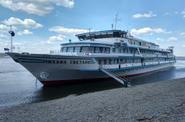
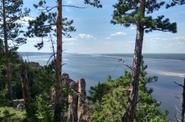
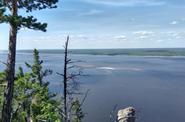
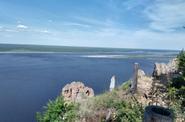 An absolutely fantastic trip! Organization: +++ The ship: +++ Weather: +++ Lena River: +++ Nature: +++ Highly recommended!