 Our Chinese department:


The Caucasus: Home to Russia’s Highest Mountains
The Caucasus is one of the youngest mountain systems in both Europe and Asia, formed mainly during the Alpine orogeny. While most of its ridges are of folded origin, the region is also home to several striking volcanic peaks.
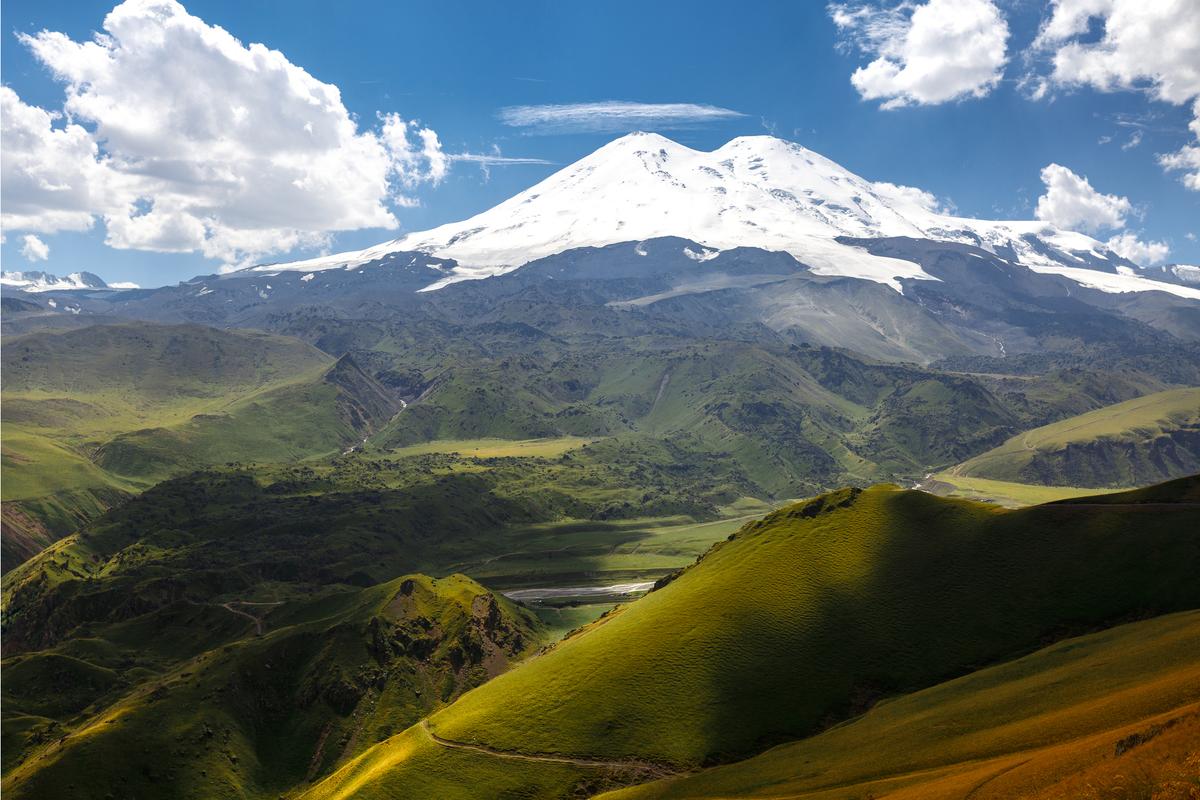
At the heart of the Main Caucasus Range rises the highest point of both Russia and Europe — the legendary twin-peaked Mount Elbrus. Its western summit reaches 5,642 meters (18,510 ft), while the eastern SUMMIT stands at 5,621 meters (18,442 ft), connected by a saddle at 5,416 meters (17,769 ft). Twenty-three glaciers, covering an area of about 135 km², cascade down its slopes starting at 3,400 meters.
Elbrus is a dormant stratovolcano estimated to be around 250,000 years old. It proudly holds a place on the famous Seven Summits list, which includes the tallest peaks of each continent.
Climbing Elbrus has long been a milestone in the history of Russian mountaineering and remains one of the most sought-after routes for adventurers and professional athletes alike.
Located in the central part of the Caucasus Range, on the border of Kabardino-Balkaria and Karachay-Cherkessia, the Elbrus area has grown into an international hub for both alpine climbing and skiing. Each year, it attracts thousands of travelers from around the globe. It is here, in the dazzling heights of Elbrus, that Russian mountaineering was born.
Beyond Elbrus, most of Russia’s five-thousanders are also found in the Caucasus, particularly in the Bezengi massif: Dykh-Tau (5,204 m), Koshtan-Tau (5,122 m), Jangi-Tau (5,058 m), and others. Another iconic peak is Mount Kazbek (5,034 m), straddling the border between Russia’s North Ossetia and Georgia. The glaciers of these giants feed the major rivers of the Northwestern Caucasus.
The Altai Mountains: The Pearl of Siberia
Geographically, the Altai Mountains are located mainly in southern Siberia. This massive range consists of towering and mid-sized ridges separated by deep river valleys, expansive basins, and intermountain depressions. Stretching over 2,000 kilometers from northwest to southeast, the Altai form a natural divide between the Arctic Ocean basin and the northeastern region of Central Asia. Relatively young in geological terms, the Altai Mountains remain seismically active.
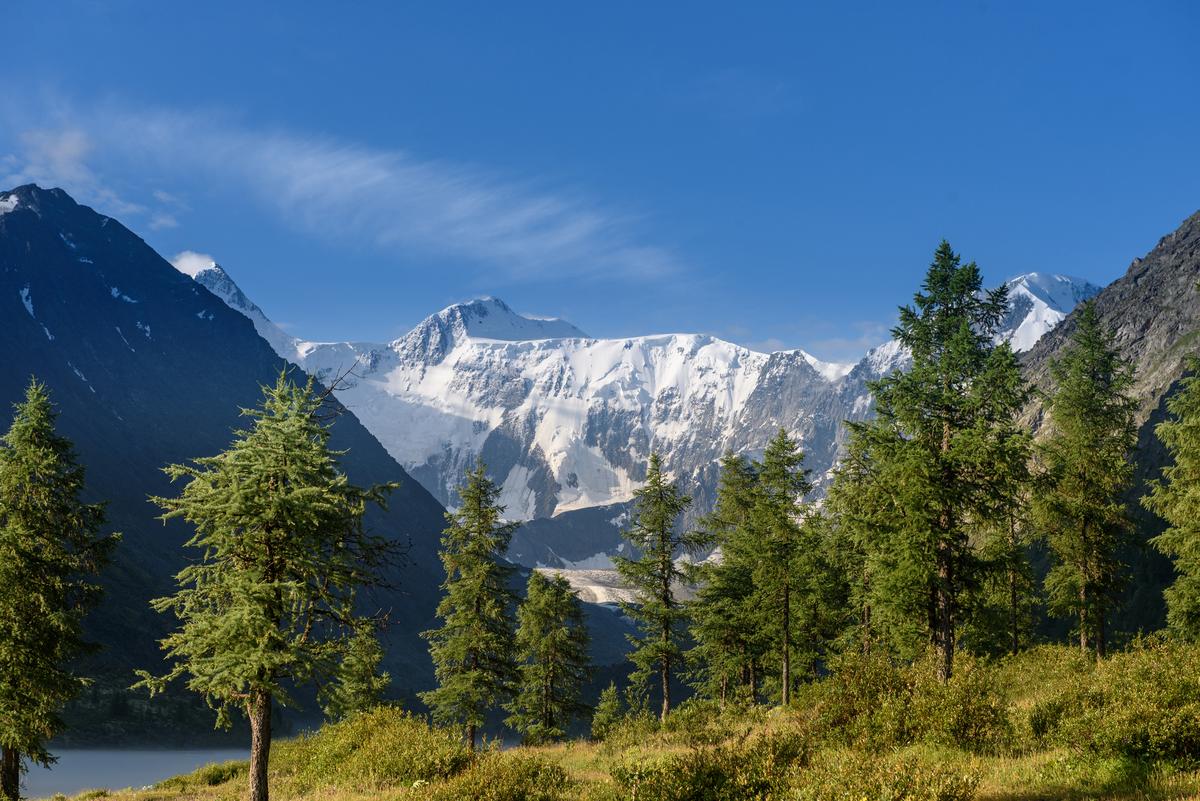
The highest point of the Russian Altai is Mount Belukha (4,506 m / 14,783 ft), a snow-clad massif with three distinct peaks straddling the border between Russia and Kazakhstan. Its slopes are home to 169 glaciers, covering roughly 150 km² and accounting for much of the Katun Range’s glaciation.
Uniquely, Mount Belukha lies at an equal distance from the Arctic, Pacific, and Atlantic Oceans. Recognized as part of the UNESCO World Heritage Site “Golden Mountains of Altai”, it attracts countless visitors every year. The area around Belukha is a mecca for mountaineers, skiers, and outdoor enthusiasts seeking adventure.
A journey to Belukha offers more than just breathtaking scenery — it is a chance to experience the spirit of discovery in one of the world’s most pristine mountain landscapes.
The Ural Mountains: Where Europe Meets Asia
The Ural Mountains stretch from the shores of the Arctic Ocean to the steppes of northern Kazakhstan. They are traditionally recognized as the natural boundary between Europe and Asia.
Among the world’s oldest mountain ranges, the Urals were formed around 250 million years ago during the collision of ancient continents.
Geographically, the range is divided into five zones running from south to north: the Southern, Middle, Northern, Subpolar, and Polar Urals. The entire system — including the eroded Pay-Khoy Ridge and the Mugodzhar Hills at the southern end — spans more than 2,600 kilometers. Its width varies from 40 to 150 kilometers, covering everything from Arctic tundra in the north to semi-desert landscapes in the south.
The highest peak of the Urals is Mount Narodnaya (1,895 m / 6,217 ft), located in the Subpolar zone. Higher mountain groups are found mainly in the northern and southern sections, while the Middle Urals average a modest 400–500 meters in elevation.
Today, the Urals are also one of Russia’s top regions for outdoor recreation. More than fifty ski resorts and wellness centers are scattered throughout the range. The most popular include Mount Belaya, Zavyalikha, Sunny Valley, Lake Bannoye, Adzhigardak, and Abzakovo. Visiting the Ural Mountains offers travelers the chance to hike, ski, and discover the unique nature of this storied region — all while standing on the very line between Europe and Asia.
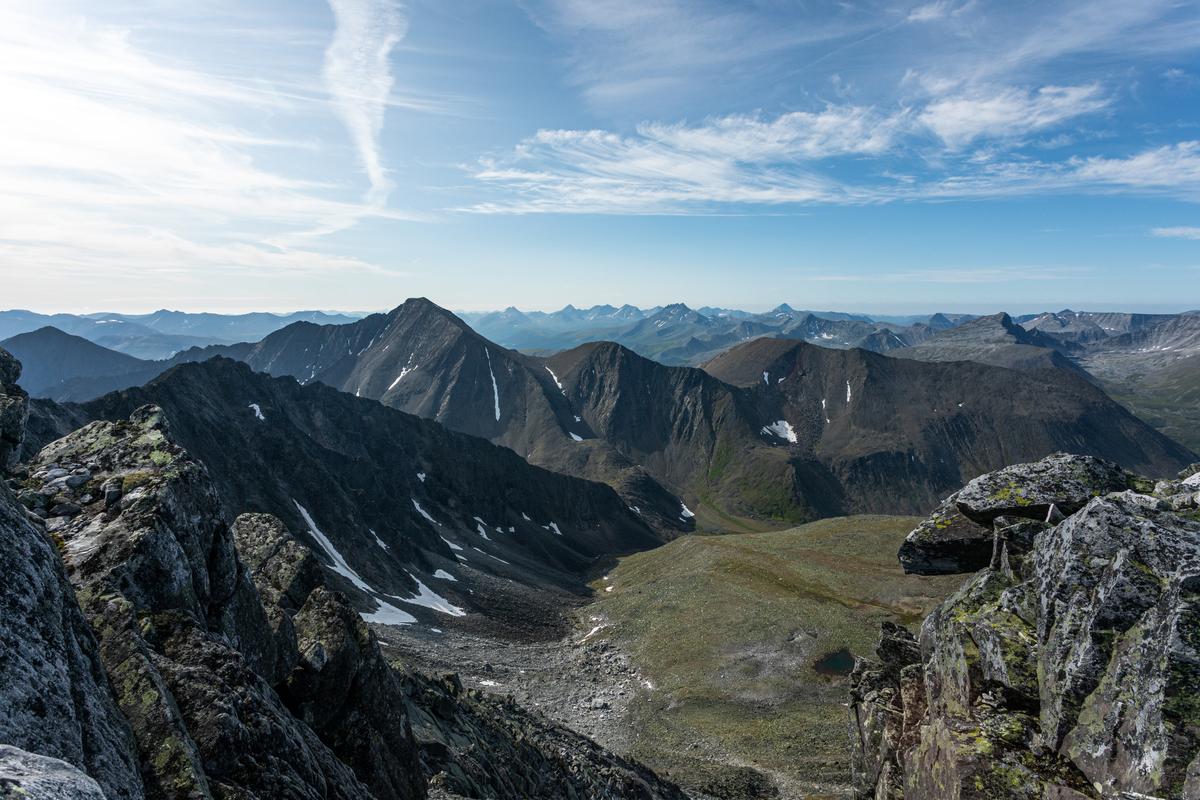
The Eastern Mountains of Russia
The Sayan Ranges: Western and Eastern Peaks
The Sayans consist of two major ranges in southern Siberia — the Western and Eastern Sayans. Their name comes from the Turkic-speaking Sayan people who once lived near the headwaters of the Yenisei and Ob rivers.
The Western Sayans border the Altai to the southwest. These mountains are relatively gentle, with few glaciers, and their highest peak is Kyzyl-Taiga (3,121 m / 10,239 ft).
The Eastern Sayans, by contrast, are crowned with icy caps. The highest summit here is Munku-Sardyk (3,491 m / 11,453 ft), located on the range of the same name and regarded as the tallest peak of the Sayans.
With their breathtaking beauty, the Sayans attract countless travelers and adventurers every year. Mountaineers and skiers flock here to conquer peaks and glide down pristine slopes. Popular destinations include the resorts of Ergaki, Arshan, and Nilova Pustyn.
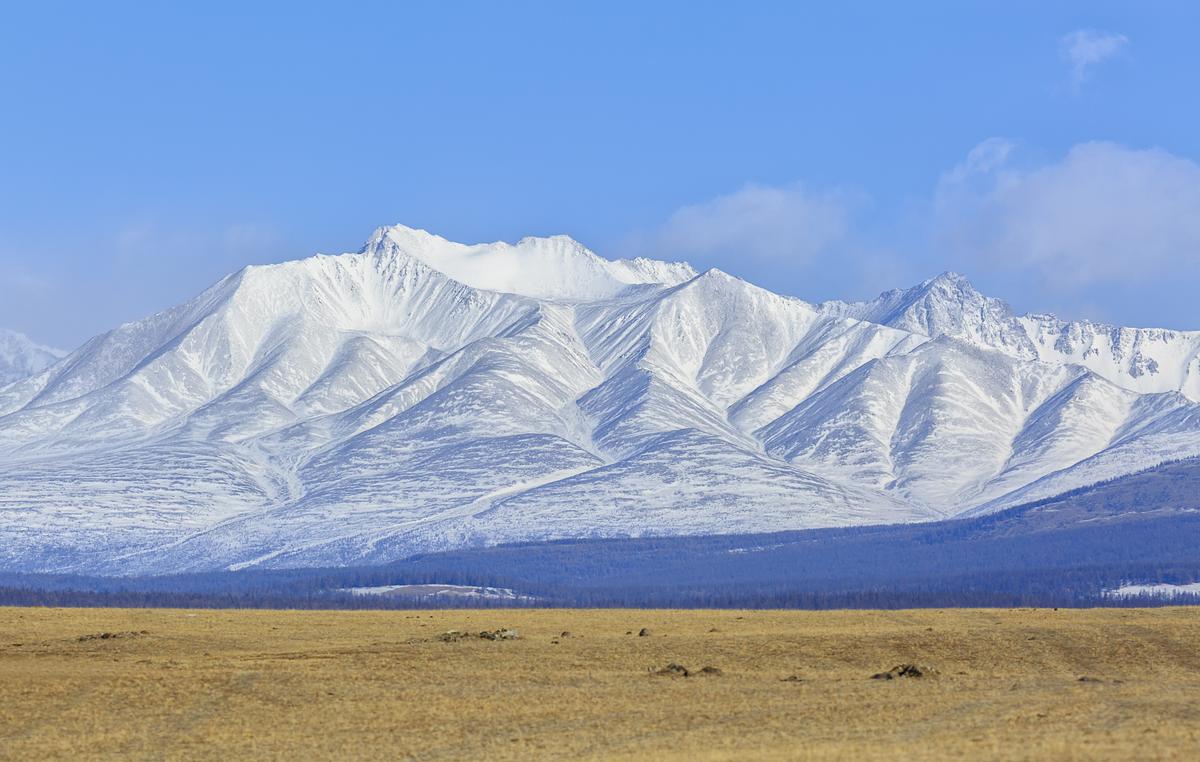
Kamchatka: Volcanoes and Adventure
The Kamchatka Peninsula is one of the most volcanically active regions on Earth. More than 160 volcanoes dominate the landscape, with over 30 still considered active today. Mountains and volcanoes cover more than 40% of the peninsula, forming massive ranges such as the Valaginsky, Vachkazhets, Vostochny, Ganalsky, and Kumroch, along with the Sredinny and Penzhinsky ridges.
Some of the most popular destinations for climbers, hikers, and skiers include:
- Avachinsky (2,741 m / 8,995 ft) and Koryaksky (3,456 m / 11,339 ft) — classic climbs for mountaineers and ski enthusiasts.
- Klyuchevskaya Sopka (4,850 m / 15,912 ft), along with Tolbachik, Bezymianny, and Kamen — surrounded by Kamchatka’s largest glacier, Erman, these peaks offer unique trekking routes, wild backcountry skiing, and dramatic volcanic landscapes.
- Mutnovsky (2,323 m / 7,621 ft) and Gorely (1,829 m / 6,001 ft) — easier climbs with spectacular views, crater lakes, waterfalls, and glaciers.
Kamchatka is a land of fire and ice, where adventurers can experience untouched wilderness, dramatic volcanic scenery, and some of the most thrilling outdoor activities in all of Russia.
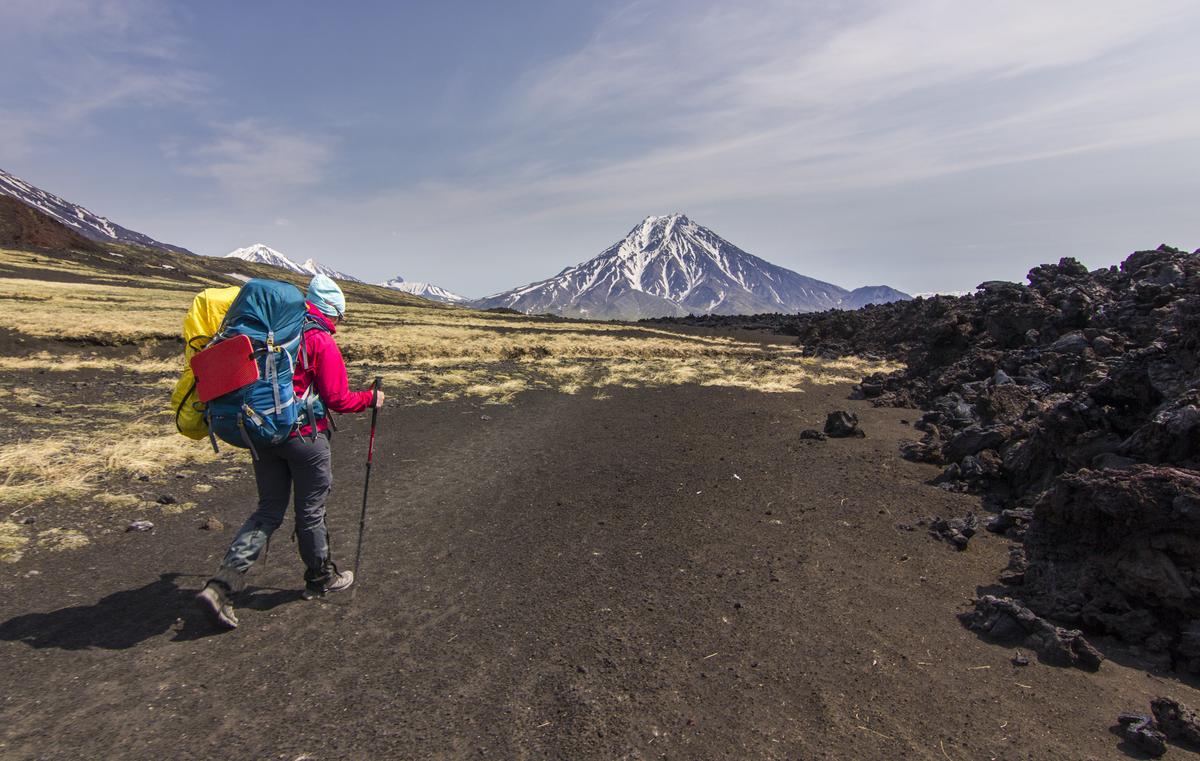
The Chersky Range: Wild Peaks of Yakutia
The Chersky Range, in northeastern Siberia, is one of the most remote and rugged mountain systems in Russia. Stretching across Yakutia and partly into the Magadan region, it plays an important role in shaping the local climate. Its highest point, Pobeda Peak (3,003 m / 9,852 ft), is also the tallest mountain in Yakutia, located just 140 kilometers south of the Arctic Circle.
Harsh weather conditions and geographic isolation make the Chersky Range a true challenge for mountaineers. Yet from July to August, daring adventurers venture here to scale its peaks and enjoy untouched wilderness. The Chersky Mountains attract adventure seekers ready for extreme expeditions in pristine landscapes.
The Verkhoyansky Range: Siberia’s Arctic Stronghold
The Verkhoyansky Range, also located in northeastern Siberia within Yakutia, together with the Chersky Mountains, shapes the region’s extreme climate. Known for its harsh Arctic landscapes and rugged terrain, this range is one of the least accessible in Russia.
Its highest point, Mount Orulgan (2,283 m / 7,490 ft, according to some sources), rises above an austere landscape. Climbing here is only possible during the short window from July to August, when conditions allow safer expeditions.
For seasoned mountaineers and explorers, the Verkhoyansky Range offers a rare adventure: a chance to discover the stark, icy beauty of Yakutia’s Arctic frontier. Join an expedition here to witness some of the wildest and most pristine mountain landscapes on Earth.
The Northern Mountains of Russia: Arctic Landscapes
The Putorana Plateau: Secrets of Ancient Mountains
The Putorana Plateau is one of the most mysterious places on Earth, which is why it has been recognized as a UNESCO World Heritage Site. The mountains here appear flat-topped, as if their summits had been cut away. The highest point is Mount Kamen (1,701 m / 5,581 ft). These pristine northern landscapes, untouched by humanity, captivate visitors with their raw Arctic splendor.
The plateau is considered one of the planet’s oldest volcanic formations. Its layered uplands are sliced by deep canyons, creating dramatic scenery. Much of the region remains unexplored, and for hundreds of kilometers you may not encounter another human being. Traveling here requires joining guided groups with experienced instructors who know how to navigate this remote wilderness.
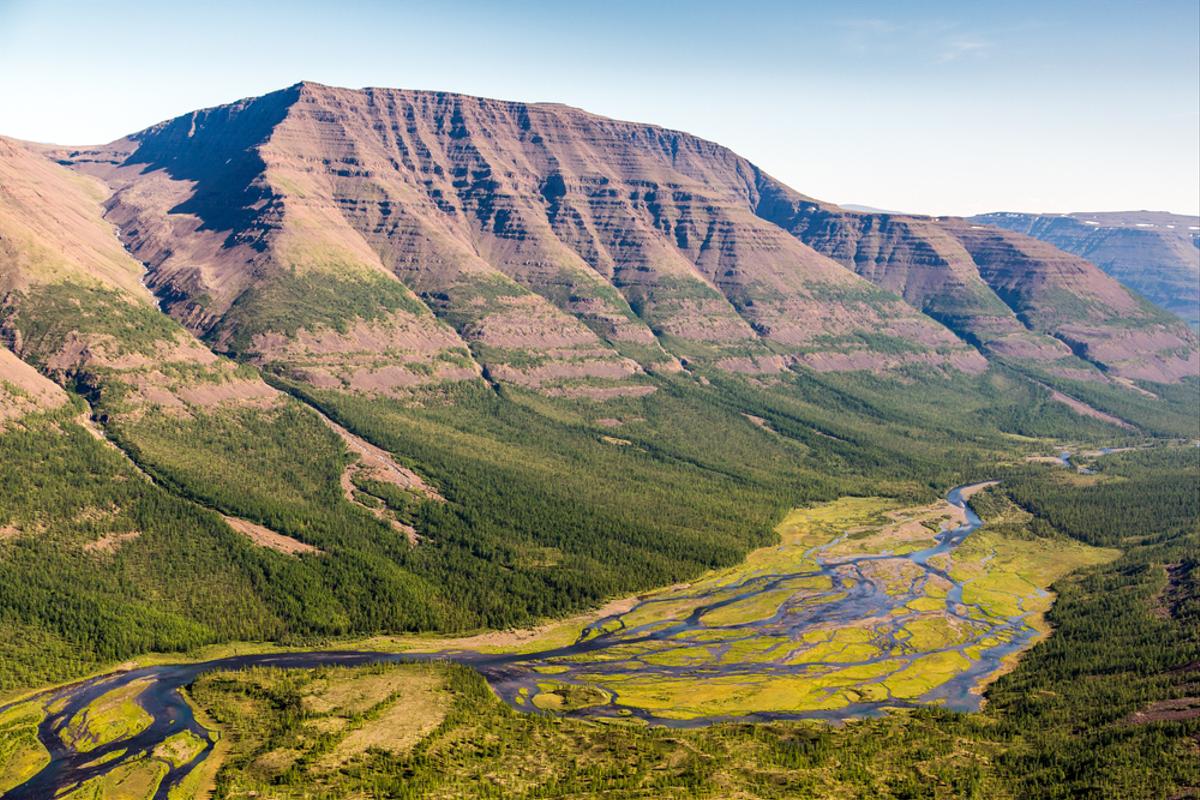
The Khibiny Mountains: Northern Lights and Scenic Trails
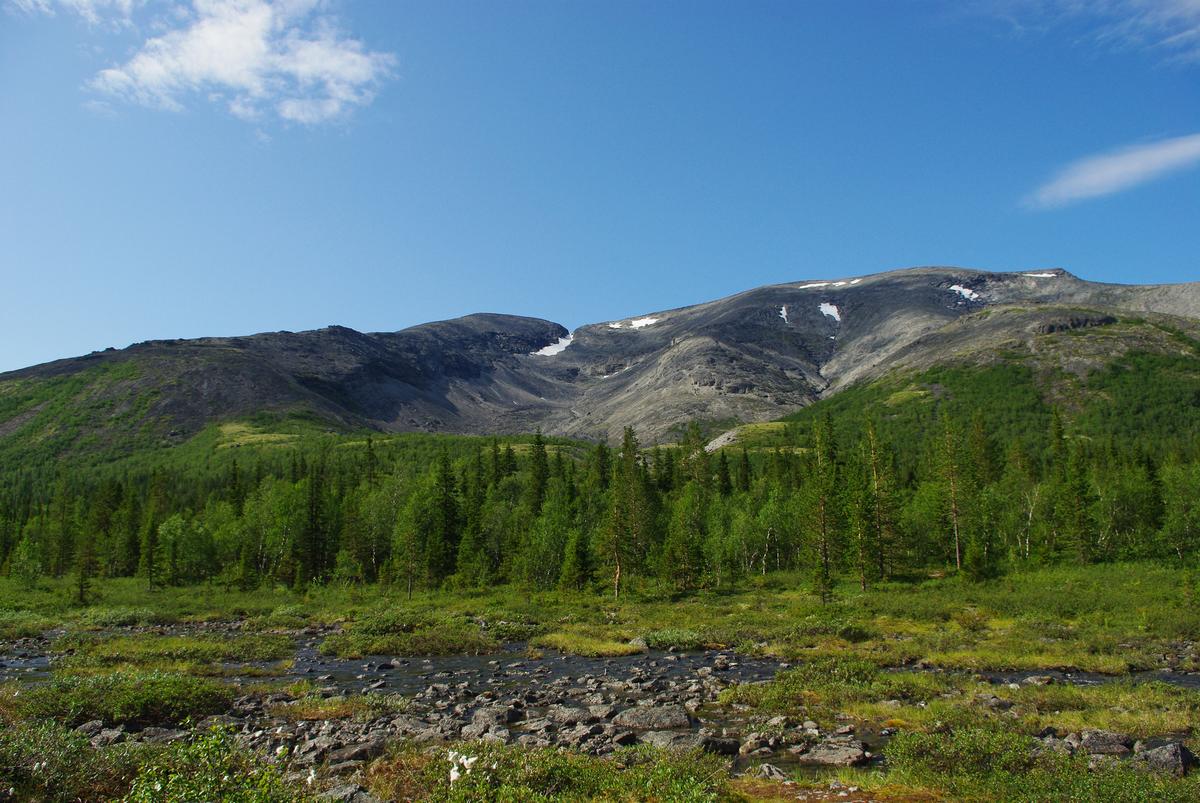
The Khibiny Mountains, the largest mountain range on the Kola Peninsula in Murmansk Oblast, may not cover a vast area — just 40 km from west to east and 35 km from north to south — but they lie only 150 km north of the Arctic Circle. Formed some 390 million years ago, the Khibiny have since eroded into gentle, rounded forms that today resemble massive hills, making them relatively easy and enjoyable to climb.
Technically more of a plateau with soft slopes, the range’s highest point is Mount Yudychvumchorr (1,200 m / 3,937 ft). The surrounding nature, combined with opportunities for outdoor adventure, attracts thousands of visitors each year. The region is home to ski resorts, climbing routes, thrilling snowmobile expeditions, and unforgettable opportunities to witness the Northern Lights.
From the towering Caucasus and snow-clad Belukha in Altai, to Kamchatka’s fiery volcanoes, the remote Chersky Range of Yakutia, and the Arctic wilderness of the Putorana Plateau — Russia’s mountains are as varied as they are spectacular. Each region holds its own secrets, challenges, and unique travel experiences.
Whether you dream of scaling new heights, setting out on alpine expeditions, or simply admiring pristine natural beauty, the mountains of Russia offer endless opportunities for discovery. Explore our tour catalog and find the adventure that will become your own personal summit.