 Our Chinese department:


Alaniya National Park
Alaniya National Park is a protected wilderness area covering about 549 square kilometers (roughly 212 square miles). It’s been under federal protection since 1998, and once you’re inside, it’s easy to see why: dense, shadowed forests give way to bright alpine meadows dotted with rare flowers and herbs; glaciers still linger on the high ridges; and icy mountain rivers rush down in waterfalls toward clear, tranquil lakes.
More than 115 bird species and around 35 mammal species live here, many of them protected. Guides often point them out on hikes and tours—and often have a few stories about the park’s efforts to protect them. The park, located in the Republic of North Ossetia–Alania, was originally established to safeguard rare animals, birds, and plants.
But nature isn’t the park’s only treasure. Scattered across the landscape are ancient cultural sites: rock carvings, centuries-old stone towers, and pagan sanctuaries that have survived in these mountains. Together they make Alaniya NP not just a nature reserve, but a window into the long history of the Caucasus.
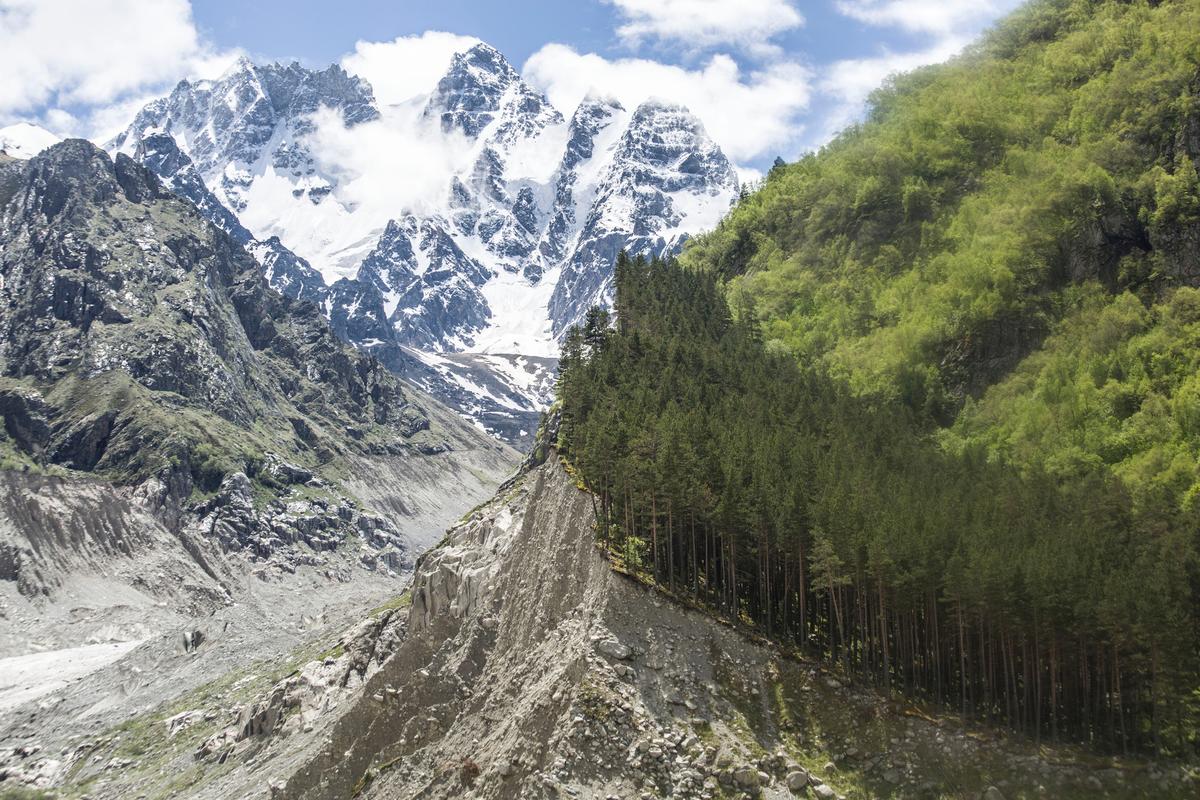
The Cliffside Fortress of Dzygvis
One of North Ossetia’s most striking landmarks is the largest rock-cut fortress in the entire Caucasus—a complex carved right into the cliff. Its “rooms” are essentially natural caves that were reinforced with stone walls, passages, and halls. This blend of human engineering and raw mountain geology attracts plenty of travelers, even though getting there is a bit of an adventure: the approach isn’t developed, and the entrance is a simple gap in the rock, requiring a short climb over boulders. This challenging approach adds to the adventure of the visit.
The fortress was originally constructed as a defensive outpost and endured more than a few sieges. The exact date of its construction is unknown, but archaeological research and historical accounts suggest that most of the complex took shape between the 13th and 16th centuries—it was already standing during the era of the Mongol invasions.
The Tower of the Brothers Kurta and Taga
Perched high on Mount Khakun, this tower is one of the most recognizable and most visited landmarks in North Ossetia–Alania. Today it is abandoned and partially in ruins, but centuries ago it was the ancestral stronghold of the legendary Ossetian clan of Kurta and Taga.
Like many historic sites in the Caucasus, the tower is wrapped in local lore. The most famous legend tells of two brothers who were devoted to falconry—a long-standing tradition in these mountains. Their falcons always returned with impressive prey, and the hunts were wildly successful. But one day, two of the birds began a fierce fight in the sky above the castle. The brothers saw this as a dark omen, a warning that conflict might erupt between them as well. To prevent bloodshed, they chose to separate, riding off in different directions to establish new family settlements.
Today, the Tower of Kurta and Taga remains one of North Ossetia’s signature attractions. From its terrace, you get a sweeping, heart-stopping view of the North Caucasus peaks. Thousands of travelers climb up here every year—and almost no one leaves without that iconic photo with the mountains in the background.
The Ahsinta Canyon
One of the most dramatic landscapes in all of North Ossetia–Alania is the Ahsinta Canyon (also called the Ahsinta–Urukh Canyon, or the Digorskaya Tesnina). It serves as a natural gateway into mountainous Digoria: a narrow cut in the Skalisty Ridge that stretches for about five kilometers, narrowing at points to just 3–15 meters wide, with sheer walls plunging 70–100 meters straight down. At the bottom, the Urukh River (also known locally as Iraf) thunders through the chasm.
Today, the road goes through a tunnel carved directly in the rock and across the famous Chyortov Bridge—“The Devil’s Bridge,” or Ahsinti-khed in Ossetian. The old trail, chiseled into the cliff and once running right along the edge of the abyss, still survives. Only the boldest hikers and photographers venture onto it now.
For centuries, the canyon’s narrowest and deepest section served as a natural fortress: invading armies could not pass a large force through such a tight passage. Once the Urukh River exits the gorge, it begins to twist more gently, its current slows, and the valley opens wide—marking the start of the scenic Digorskoe Gorge.
If you’re traveling in North Ossetia, don’t miss it. The views here are genuinely epic, especially from the Devil’s Bridge or the lookout points above the canyon.
The Tseyskoe Gorge
Tseyskoe Gorge is one of the most scenic and popular places in all of North Ossetia–Alania. It runs for roughly 23 kilometers along the fast-moving Tseidon River, starting near the village of Buron at about 1,300 meters (4,265 feet) above sea level. The main recreation area and ski resort sit higher—between 1,910 and 2,200 meters—where the air feels impossibly crisp, the slopes are lined with pine forests and alpine meadows, and the glaciers tower nearby.
The modern Tsey ski complex has seven runs totaling over seven kilometers (with blue, red, and black slopes), two lifts (a chairlift and a gondola), and a vertical drop of up to 920 meters. The ski zone stretches from 1,950 to 2,870 meters. The season usually lasts from December through April, with consistently soft powder snow.
Summer is equally appealing. The lifts keep running, and hikers and horseback riders head out on trails to the Skazsky and Tseysky glaciers, to waterfalls, to the Rekom sanctuary (one of the most sacred Ossetian religious sites), to Mount Monakh, and to several ancient Ossetian shrines tucked into the high valleys.
The infrastructure is excellent: several hotels and guesthouses of all levels (from budget to very comfortable), cafés serving traditional Ossetian pies, local bathhouses, and plenty of gear-rental spots. During peak season, the gorge can host several thousand visitors at once.
Tseyskoe Gorge consistently ranks among the most visited places in North Ossetia—and it is well-deserved.
The Cable Cars of Tseyskoe Gorge
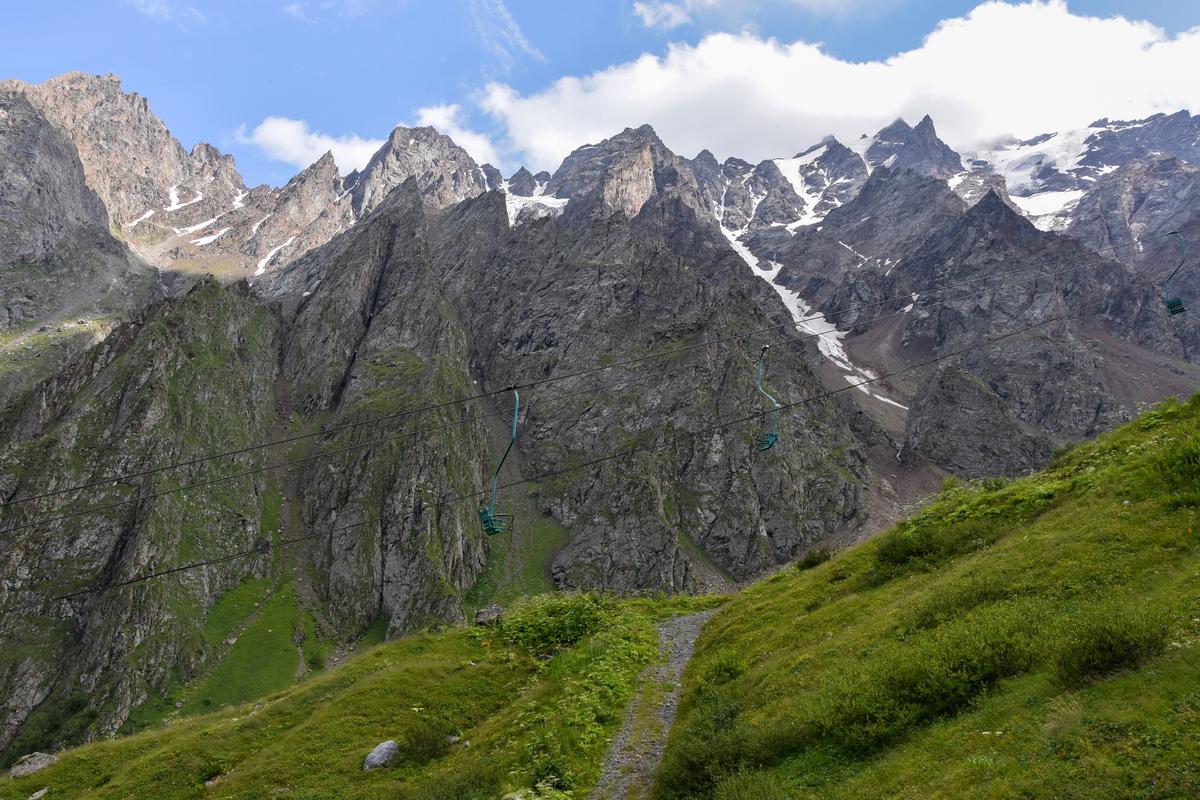
These are some of the most atmospheric man-made landmarks in Tsey. In winter, the cable cars whisk skiers and snowboarders up to the start of the slopes; in summer, they become the best way to take in a true bird’s-eye view of the gorge—dense pine forests, alpine meadows, roaring waterfalls, the Skazsky and Tseysky glaciers, and sweeping panoramas of the Adai-Khokh and Wilpata peaks.
There are two cable lines in Tsey:
The main lift is a modern Austrian double chair. It runs about 1,600 meters with a vertical gain of roughly 500 meters, and the ride takes around 20 minutes. It transports visitors from the recreation area (about 1,950 meters) up to Green Hill and the moraine of the Skazsky Glacier (around 2,500 meters).
The second lift is an old Soviet-era single chair. It’s about 1,400 meters long, operates less frequently, but also provides access into the upper ski zone.
At the base station, there are several cafés serving Ossetian pies (savory, thin-crust, cheese-and-herb pies that are a Caucasus staple), freshly grilled shashlik, and hot tea. At the top, visitors can enjoy panoramic views from a few lookout platforms. The glacier is only a 10–15 minute walk from the station, and the scenery there impresses even experienced visitors.
The “City of the Dead” in Dargavs
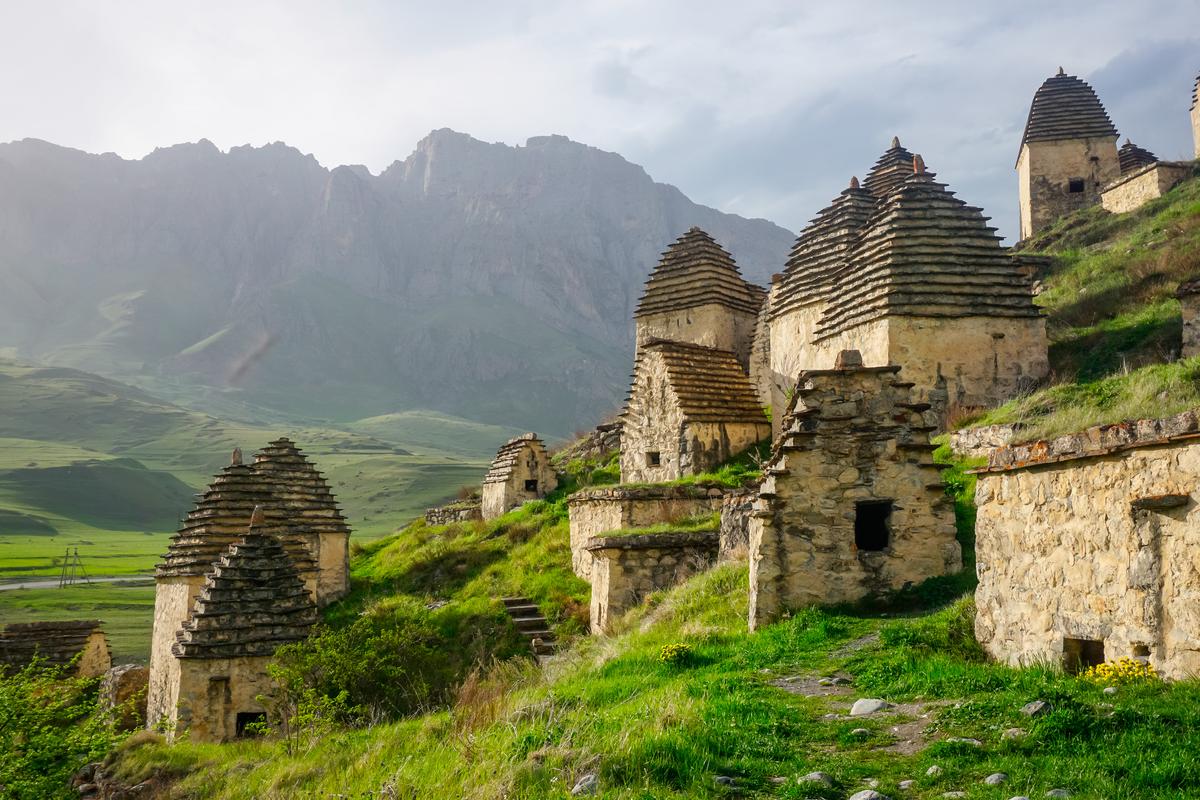
A few kilometers from the mountain village of Dargavs, on the scenic slope of Mount Raminyrakh, lies one of the most mysterious and photogenic places in all of North Ossetia–Alania: the famous “City of the Dead.” From a distance it really does look like a tiny ancient town. Dozens of white-stone structures with stepped, pyramid-shaped roofs made of slate tiles are scattered across a green hillside. You see the view already from the winding approach road, and it instantly takes your breath away. In reality, this is the largest crypt necropolis in the North Caucasus, made up of around a hundred stone burial chambers dating back to the 14th–18th centuries.
Today, the “City of the Dead” is one of the republic’s signature attractions and a must-see on virtually every tour through the mountains of Ossetia. Local guides tell chilling legends, point out the so-called “wells of fate”—where people once tossed a coin to learn whether a soul would reach heaven (if it rang against the stone, it was considered a good sign)—and show visitors the best-preserved crypts.
The Monument to Uastyrji
This is arguably the most dramatic, photogenic monument not just in North Ossetia–Alania, but in the entire North Caucasus. A massive figure of Uastyrdzhi—the chief protector of men, travelers, and warriors in the Nart epic—bursts straight out of a cliffside above the Transcaucasian Highway in the Alagir Gorge. It looks less like a statue and more like a superhero frozen in mid-charge.
The sculpture weighs about 28 tons, cast entirely in bronze and anchored to a steel frame. The rider and his horse tower roughly 6 meters (about 20 feet) high, while the entire monument stands some 20–25 meters above the road, with cars passing directly underneath. Cars actually drive right underneath it.
As soon as the monument was unveiled in 1995, it quickly became a popular tourist attraction. Locals treat Uastyrdzhi with deep reverence: it’s customary to honk three times while passing, and men often step out of their cars to pray or leave coins.
The Karmadon Gorge
It is one of the most dramatic and visually striking places in all of North Ossetia. In September 2002, the area experienced the catastrophic collapse of the pulsating Kolka Glacier—one of the most destructive glacier events the Caucasus has ever seen. A massive wave of ice, rock, and debris swept through the gorge at over 100 km/h (more than 60 mph), killing more than 120 people and reshaping the entire landscape. Even today, the lower part of the gorge is filled with a large mass of boulders and frozen mudflow, a stark reminder of the tragedy.
Karmadon Gorge appears in many tourist itineraries, but visiting it requires caution. The Kolka Glacier is still considered “pulsating,” so climbing above certain points is prohibited, and the area is continuously monitored by emergency services.
Yet the gorge itself is incredibly beautiful: sheer cliffs, the fast-moving Genaldon River, waterfalls, and sweeping views of Mount Kazbek and the surrounding five-thousand-meter peaks.
Nearby is the village of Koban, where a famous burial ground of the Koban culture (Bronze and early Iron Age) was discovered in the 19th century. Artifacts from the site are now housed in the Hermitage, the British Museum, and other major museums around the world.
Natural Landmarks of North Ossetia
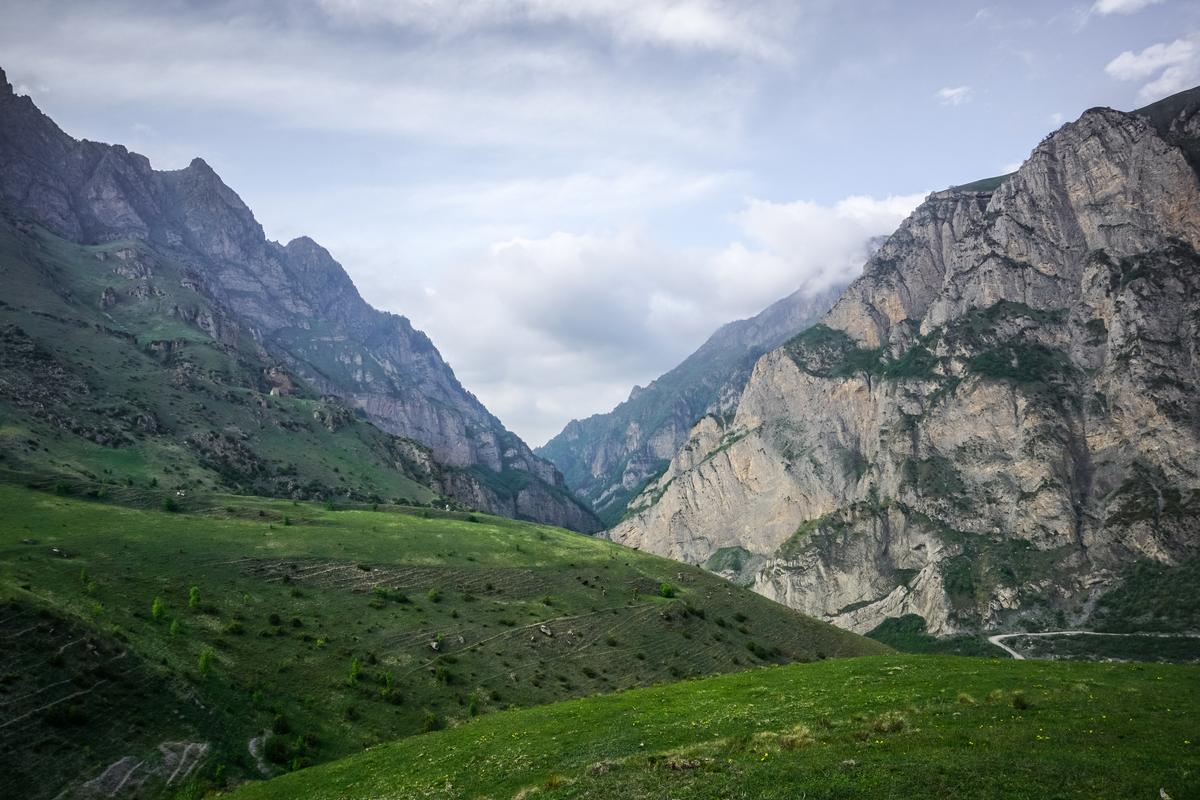
The Republic of North Ossetia–Alania is packed with natural wonders—places worth seeing, photographing, or simply remembering. A trip through these landscapes always leaves vivid impressions.
The Mineral Lake
One of the most photogenic spots in all of North Ossetia, this bright turquoise lake lies in the Ardon Gorge near the village of Tamisk. Its striking color comes from a high concentration of minerals and naturally dissolved elements in the water.
The lake is framed by rugged slopes and rocky outcrops, making it a perfect setting for atmospheric shots against the backdrop of the Caucasus.
Mount Stolovaya
One of the North Caucasus’ most iconic natural landmarks—and a symbol of Vladikavkaz (its silhouette even appears on the city’s coat of arms)—Mount Stolovaya rises to about 2,994 meters (9,820 feet). Its name, which means “Table Mountain,” comes from its flat summit and steep, sheer slopes resembling a giant tabletop—a type of formation geologists call a mesa.
The mountain has been sacred for centuries. On its slopes, you can still find Alan and Ingush shrines and sacrificial altars dating back to the 10th–13th centuries. In later times, Ossetians and other local peoples continued to perform rituals here.
Reaching the summit is achievable for hikers with basic fitness—no technical climbing equipment is required. The most popular route, known as the “Trail of the Ancestors,” usually starts from the village of Beyni. It gains roughly 1,400 meters (4,600 feet) in elevation and takes about 5–7 hours to complete.
From the top, the views are spectacular: you can see Vladikavkaz below, the surrounding gorges, and the sweeping peaks of the Central Caucasus.
The Midagrabin Waterfalls
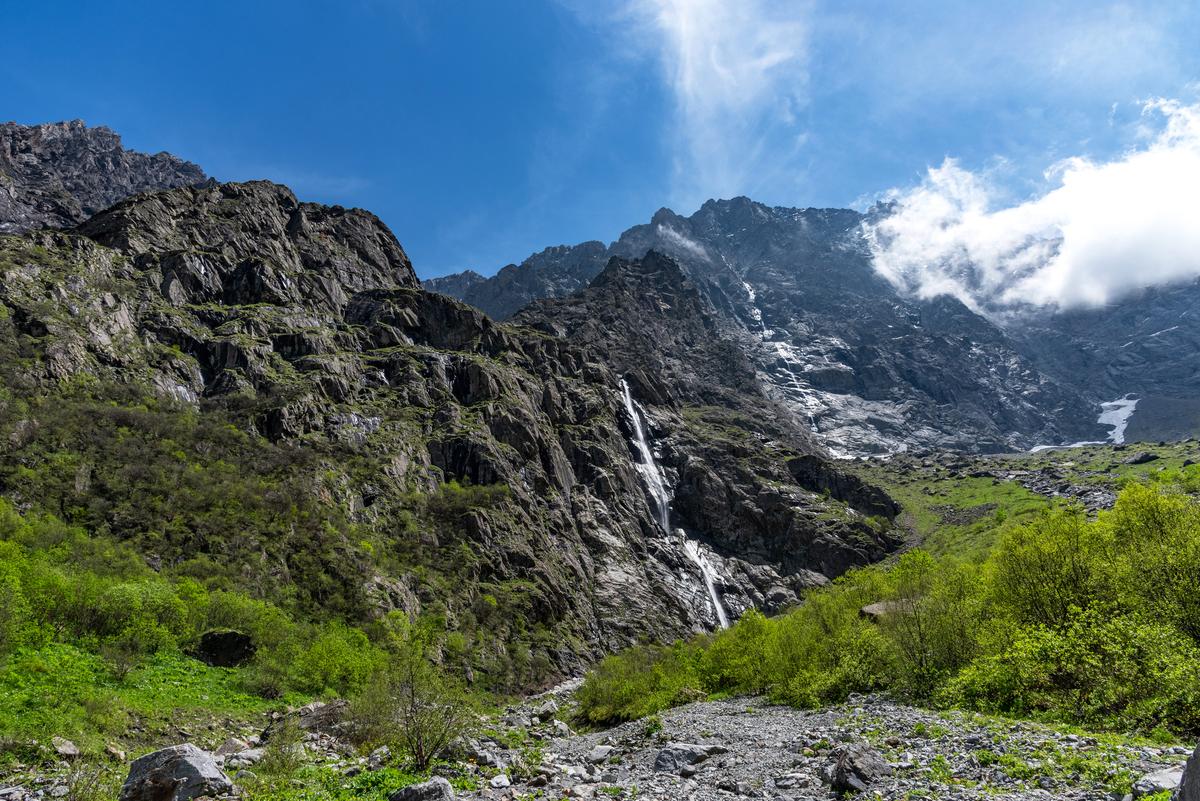
The Midagrabin Cascade is one of North Ossetia–Alania’s most impressive natural wonders: a series of tall, tiered waterfalls set against rugged mountain terrain, creating landscapes that feel truly epic. Among them is Bolshoy Zeygelan, one of Europe’s tallest waterfalls, with a height estimated between 648 and 750 meters (2,125–2,460 feet).
According to local legend, a wish made at Zeygelan will come true—if you arrive with a pure heart, your thought is carried upward along the water, into the universe.
Zeygelan isn’t the only impressive fall in the cascade; the entire series of waterfalls showcases the region’s striking natural beauty and is a point of pride for the republic. The best time to visit is summer, when the glaciers begin to melt and the waterfalls are at their fullest, most powerful, and most picturesque.
The Khetag Grove
According to legend, Khetag was the son of a local prince. He secretly converted to Christianity and took refuge in a dense forest to escape relatives who practiced Islam. Exhausted and desperate, Khetag prayed to Saint George (Uastyrji, the Ossetian patron of warriors and travelers), and a miracle occurred: the trees “moved,” closing in around him to form an impenetrable wall, hiding him from his pursuers. Since then, the grove has been considered sacred, imbued with a special power.
The Khetag Grove is one of the main Ossetian sacred sites and a key landmark in North Ossetia–Alania. It draws pilgrims, especially during the annual Khetag festival. Within the grove stands a small prayer house called a kuvandon. Strict rules govern visitors: the trees are under special protection, and any actions that could harm the forest or disturb the sanctuary’s peace are prohibited.
The “Trail of Wonders”
The trail lives up to its name: hikers encounter a series of truly unique sights along the way. There’s plenty to marvel at—towering rock walls, unusual natural formations, and breathtaking panoramas of the surrounding landscape.
The trail’s clever design makes it especially thrilling. Carved along a sheer cliff, the Trail of Wonders features a protected walking path, scenic lookouts, and a small footbridge, creating the exhilarating sensation of hovering above the Kadargavan Gorge. A large boulder topped with a decorative sword has become a favorite photo spot.
The trail passes through the Kurtatin Gorge (also called Fiagdon). While the Kadargavan narrow pass is short, its depth is impressive—reaching up to 60 meters (almost 200 feet) in places.
Nearby lies the village of Tsmity, a true “open-air museum” with preserved arrow slits, defensive and residential towers, crypts, and medieval buildings from the 13th–16th centuries. It’s an ideal combination for a single outing: start with the trail, then explore the rich architectural heritage of Tsmity.
The Karaugom Glacier
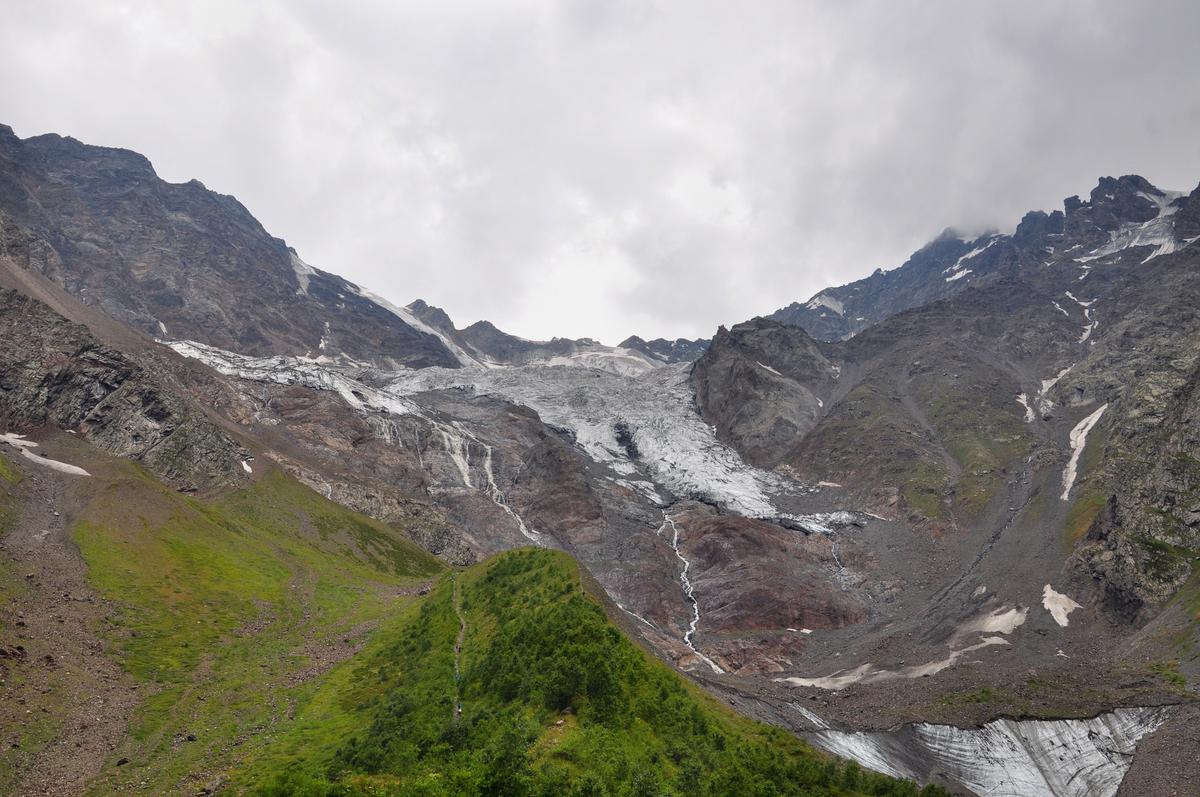
Glaciers hold a special place among North Ossetia–Alania’s natural wonders, and the Karaugom Glacier is one of the most striking. Nestled in a massif where vast icy fields meet dense forests, it creates a rare and breathtaking contrast of landscapes.
Karaugom stretches roughly 13 km (8 miles) in length, covering an estimated area of 20 to 26 square kilometers (8–10 square miles). Its tongue descends surprisingly low—reaching about 1,800 meters (5,900 feet) above sea level—and even touching the forested slopes below.
Once much larger, the glacier has been slowly retreating in recent decades, a change scientists attribute to global warming. Near its tongue lies a scenic meadow dotted with grasses and alpine plants—a favorite spot for climbers and trekkers to rest and admire the ice mass.
The Skazka Glacier
Officially called the Skazskiy Glacier, it is better known among locals as Skazka—“Fairy Tale”—a name that perfectly reflects its almost magical beauty..
The glacier sits in the Tseyskoe Gorge on the slopes of Mount Aday-Khokh. It stretches about 3–4 kilometers (2–2.5 miles) long, with its upper reaches climbing to roughly 3,900 meters (12,800 feet).
Summer is the ideal time to visit, when the surrounding meadows burst with fresh greenery and wildflowers, creating a picture-perfect landscape. In winter, Skazka attracts mountaineers and winter sports enthusiasts. Within its icy depths are grottos and ice caves that feel like natural “halls,” adding to the glacier’s enchanting allure.
Religious Sites of North Ossetia
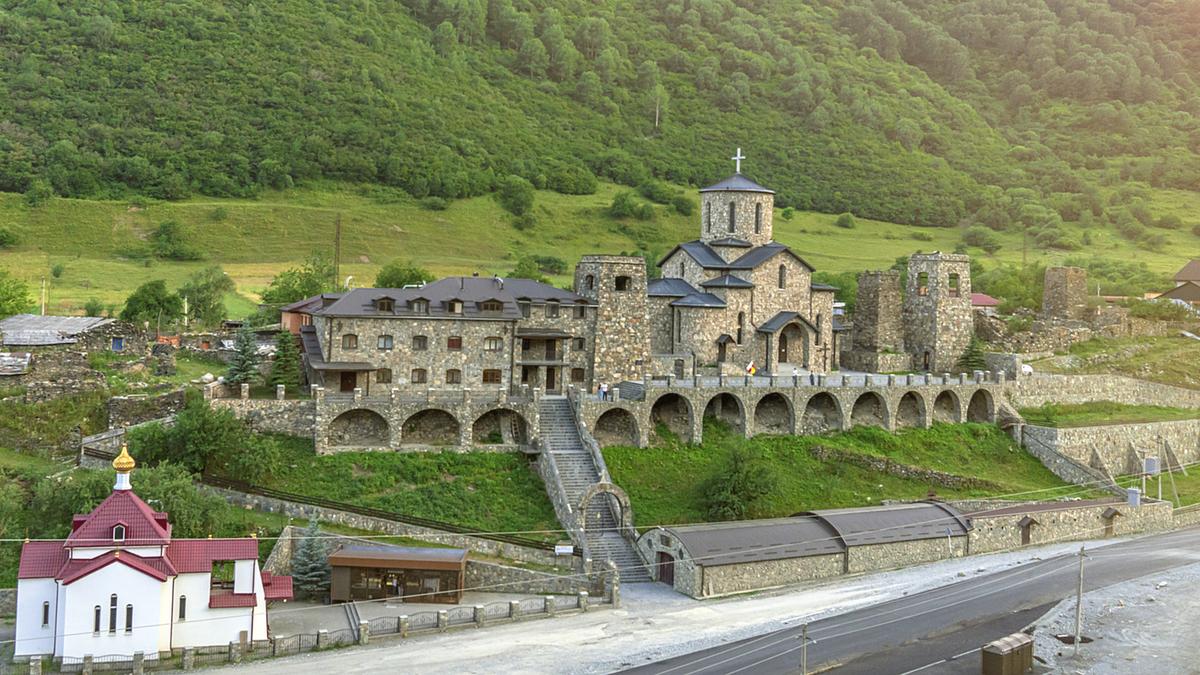
Alan Holy Assumption Monastery
This monastery for men isn’t a historical monument ——the main buildings were constructed fairly recently, between 2000 and 2004. Yet its architecture, blending Russian-Byzantine traditions with elements of Ossetian design, gives the complex a surprisingly timeless and harmonious feel. The use of natural stone makes it seem as if the monastery has stood here for centuries. Two restored 18th-century watchtowers are seamlessly integrated into the ensemble, adding to the sense of history.
Perched high in the Kurta Gorge, the monastery is one of North Ossetia’s major spiritual centers and a significant pilgrimage site. Many tourist routes pass through the complex. Visitors are often offered herbal infusions made from local medicinal mountain plants, and photography of the exterior is permitted, provided you follow the established guidelines.
St. George’s Cathedral
This Orthodox cathedral sits right in the heart of Vladikavkaz (the capital of North Ossetia–Alania), so there’s no need to hike into the mountains to see it. It’s one of the largest and most beautiful churches in the region.
The architecture blends classic Orthodox design with touches of Byzantine influence: a central dome perched on a drum of windows, a traditional cross-in-square layout, an apse, and a bell tower—all combining to create a majestic, visually powerful ensemble.
St. George’s Cathedral ranks among the top religious and cultural landmarks of Vladikavkaz and the wider region. For many visitors to North Ossetia, it’s a must-see.
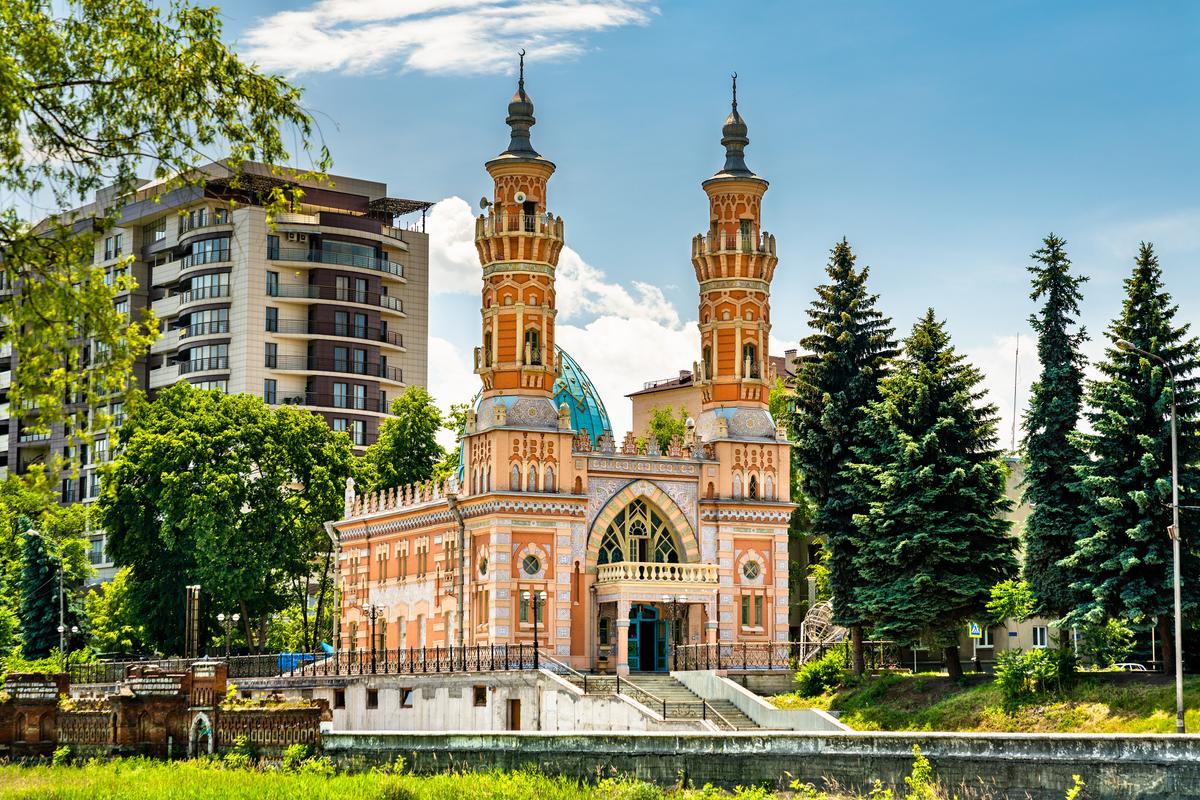
Sunni Mosque (Mukhtarov Mosque)
Another stunning religious landmark in Vladikavkaz (the capital of North Ossetia–Alania) is the Sunni Mosque, situated on the banks of the Terek River at the foot of Stolovaya Mountain. Its silhouette, framed by two elegant minarets, has become one of the city’s iconic symbols. Some say its design was inspired by Cairo’s Qaitbay Mosque, giving it an exotic flair against the backdrop of the rugged Caucasus mountains.
Inside, the mosque is equally impressive: walls and vaulted ceilings are adorned with intricate Eastern-style frescoes and decorative patterns, creating an airy, almost ceremonial atmosphere.
The mosque is also known as the Mukhtarov Mosque, named after Baku oil magnate Murtuza Mukhtarov, who fully funded its construction. According to local legend, he did it in memory of his first meeting with his future wife, the Ossetian Liza Tuganova.
Church of Saint Gregory the Illuminator
Continuing the tour of Vladikavkaz’s main religious landmarks, the Church of Saint Gregory the Illuminator is well worth a visit for its intriguing architecture. This is an active Armenian Apostolic church, located on the right bank of the Terek River near the Olginsky Bridge.
The main stone structure was built between 1864 and 1902, and it gained its current look after a major restoration in 2011. During the restoration, workers discovered an old dolomite altar—a rare archaeological find and sacred relic, likely originating from a wooden church that stood here in the early 19th century.
Constructed from red brick, the church is topped with conical domes crowned with uniquely shaped crosses. A large entrance portal contrasts with the narrow, elongated windows, giving the building a distinctive, memorable style.
Rekom Sanctuary
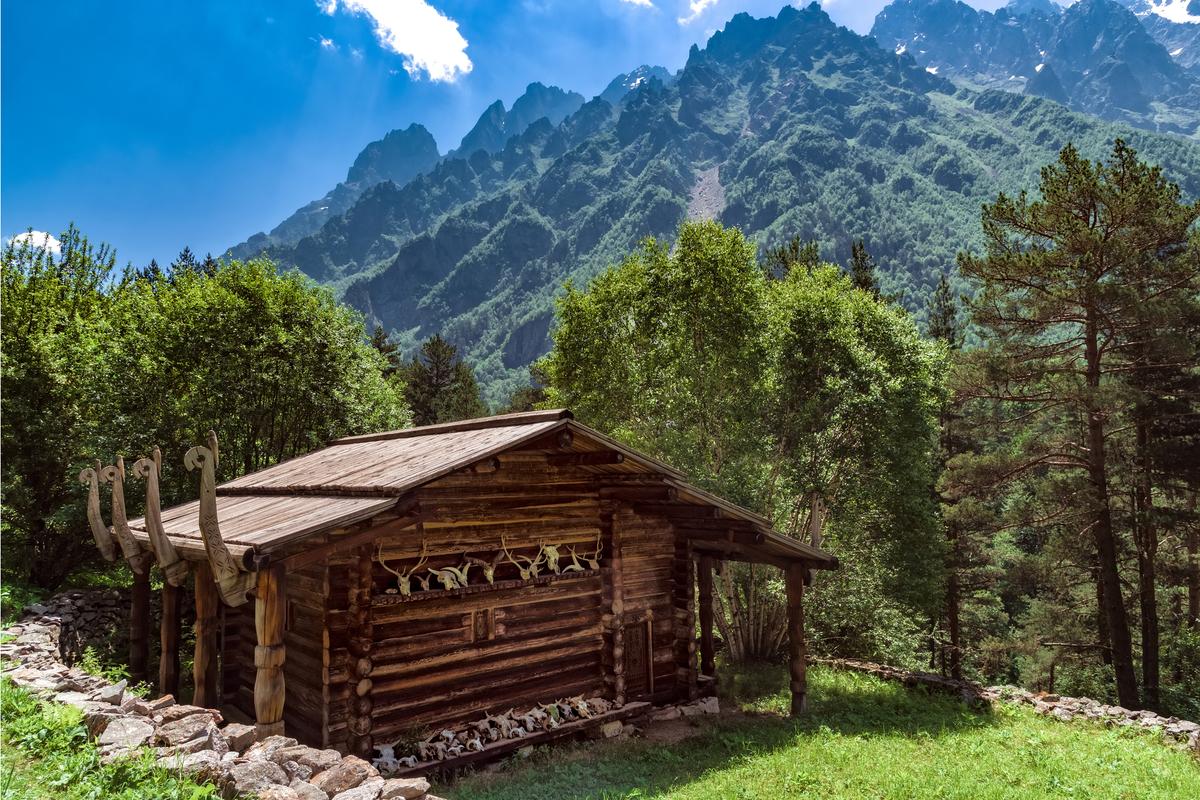
One of the oldest sacred sites in North Ossetia, Rekom Sanctuary is tucked away in the Tseyskoe (Tsey) Gorge—long considered a center of mystical energy. This is no ornate temple with gilded interiors. On the contrary, the structure is built from pine logs using an ancient oblo technique—stacked without nails—giving it the appearance of a hermit’s simple cabin.
The sanctuary is dedicated to Rekom, a deity from ancient Ossetian legends (the Nart epic). Locals made offerings here, seeking his protection for hunting, bountiful harvests, and healing from illnesses. Along the front wall, animal skulls are lined up—a symbolic reminder of these rituals. Rekom is considered a “male” deity, and entry to the sanctuary is traditionally reserved for men only—on two special days each year. For most visitors, what lies inside remains a complete mystery: there are no interior photos, and looking inside is strictly forbidden. Women are not allowed at all.
Legend has it that Rekom Sanctuary came into being when the supreme god wept upon learning of the death of the Nart thunder spirit, Batradz. Wherever his divine tears fell, three sacred sites were formed—one of them being Rekom.
In 1995, the sanctuary was struck by lightning and burned down. It was fully rebuilt according to memory, faithfully following the original construction rituals. The modern Rekom differs from the ancient version only in materials: while the original was made from yew or larch, those trees are rare in the area, so the restored sanctuary uses pine, which grows abundantly throughout North Ossetia.
North Ossetia–Alania: The Pearl of the Caucasus
North Ossetia–Alania is like a hidden gem of the Caucasus, ready to reveal itself to those seeking adventure. From towering glaciers and cascading waterfalls, where nature shows its untamed power, to the ancient crypts of the “City of the Dead” and mysterious sanctuaries echoing the legends of the Narts, every corner tells a story. Here, every stone, every peak, and even every Ossetian pie is part of a living history, where the past blends seamlessly with the present—and the warm hospitality of the locals makes every journey unforgettable.

In 2025-2026, tourism in the republic is booming and continues to grow : new eco-trails, refreshed routes through the Tseyskoe (Tsey) and Kurtatinskoe (Kurtatin) gorges, and culinary tours featuring hands-on pie-making workshops are just the beginning.
Don’t wait—grab your backpack, set your compass, and explore Alania. See you on the trails!